

FMCG Marketing in China:
What We Do For Foreign Consumer Brands
The Chinese FMCG market is primarily driven by online-to-offline (O2O) channels and stable demand from lower-tier cities. This reality shapes how we design every FMCG campaign in China.
With local consumer confidence deeply influenced by local digital ecosystems, creator recommendations, and community discussions, it creates unique challenges for foreign brands seeking to reach and engage Chinese audiences.
Having executed FMCG marketing in China, we’ve seen that successful campaigns rely primarily on building sustained digital brand presence across the channels Chinese consumers use every day.
This hands-on campaign experience guides the platforms we prioritize, the audience segments we target, the compliance regulations we monitor, and the performance metrics we optimize.
Strategies We Execute for FMCG Marketing in China
When helping foreign FMCG brands enter China’s digital landscape, our strategy primarily focuses on identifying the channels where campaigns will be most effective and drive significant growth.
Depending on the brand’s marketing goals and target audience, we design a framework specifically aligned with the requirements of Chinese social media platforms, search engines, online communities, and other digital landscapes relevant to your industry.
Social Media Marketing for Brand Visibility
Approximately 8 out of 10 (79.1%) younger consumers in China discover new brands and search product details on local social media platforms before making a purchase. This alone shows the influence digital marketing channels hold in reaching Chinese consumers.
To maximize this opportunity for foreign FMCG brands, our social media marketing campaigns are often planned around:
1. WeChat
On WeChat, Sekkei Digital Group activates and operates official accounts for foreign consumer brands to publish native, lifestyle-driven content that reflects how Chinese consumers actually discover, try, and talk about the products and services they recommend and trust.
That includes campaign work that supports brand awareness, product education, habit-building, and community engagement without asking consumers to step outside the WeChat environment they already use every day.
How We Use WeChat for FMCG Marketing in China
WeChat is most effective from the consideration stage of our FMCG marketing campaigns in China through to repeat consumption.
It is not always where a consumer first hears about a product, but it is where they return to learn more, join brand communities, participate in activations, and stay connected between purchases.
- WeChat Articles: To build brand awareness and deepen product relevance, we publish long-form content that ties FMCG goods into real consumer needs and usage. These articles help Chinese consumers understand why your brand fits into their routines and lifestyles.
- WeChat Channels: We use short-form video to drive brand reach and recall, especially in fast-moving consumer goods (FMCG), where consumers make quick decisions. Channels content typically focuses on product demonstrations, brand education, creator-led collaborations, and lifestyle applications.
- WeChat Mini-Programs: We build Mini-Programs that support actions such as sampling, product information, sign-ups, coupon distribution tied to offline redemption, loyalty or membership perks, event registration, store locator journeys, and other campaign-based interactive user experiences.
- WeChat Search Optimization: We optimize titles, content structure, keywords, tags, and account metadata so consumers find your brand during in-app WeChat searches related to product categories and trend-driven topics.
What We Avoid in WeChat FMCG Marketing Campaigns
WeChat marketing campaigns lose impact when brands publish overly corporate messaging or global content that does not align with local online consumption habits. Chinese consumers respond strongly to practical brand information and cultural alignment, not repurposed Western assets.
Case Study Example
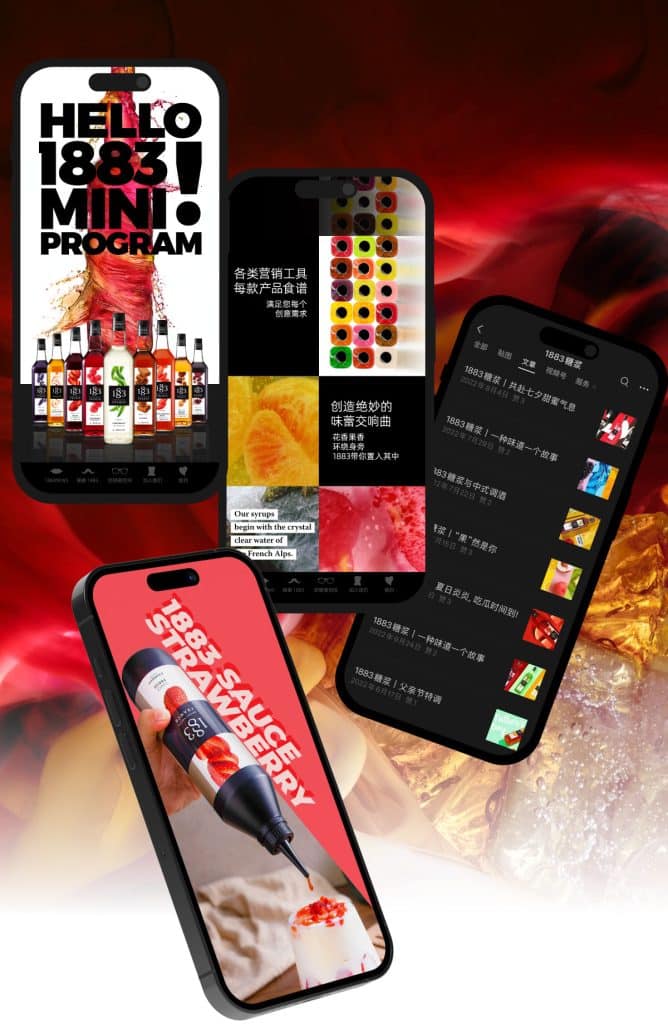
1883 by Maison Routin is a French syrup maker known for its premium aromatic expertise and strong reputation across cafés, restaurants, and hotels in Europe. To grow in China, the brand wanted to reach professional buyers such as baristas, restaurants, and hotels through a stronger WeChat presence.
Our team developed a WeChat social media campaign for them, spanning official account setup and management, localized content publishing, and Mini Program development to create an interactive brand experience for their key audiences.
The success of this campaign led to 1883 generating 40% year-over-year growth in WeChat followers, a 15% increase in engagement, and 58 produced articles.
2. Weibo
Weibo is one of the ideal marketing channels for FMCG brands to gain broad public visibility in China. Its open feed, hashtag-driven culture, and community-centric conversations make it effective for shaping awareness of product stories, seasonal demand, brand collaborations, and culturally relevant topics that consumers actively discuss and share.
How We Use Weibo for FMCG Marketing in China
In our China FMCG marketing campaigns, we use Weibo to quickly enter public conversation, reinforce key messages, and stay present during moments when people are deciding which FMCG goods and categories are relevant to their interests and needs.
Our typical FMCG marketing strategy for Weibo includes:
- Posting according to the Chinese content calendar, including key dates such as public holidays, e-commerce festivals, co-branded campaigns, and offline industry events to reach consumers when they’re most engaged.
- Collaborating with lifestyle KOLs and content creators who can show how products fit into daily lifestyles that feel native to the platform.
- Real-time participation in trending topics and hashtags where it makes sense for the brand voice, helping products appear in more user feeds.
- Publishing brand personality content that showcases product craftsmanship, business origin stories, tips, and other related topics to make the brand more relatable and human.
What We Avoid in Weibo FMCG Marketing Campaigns
Non-domestic brands tend to misuse Weibo as a channel purely for press releases and company news. Overly polished, sales-heavy posts do not work well on a platform built for community reaction and cultural timing.
We also avoid running creator content and brand content separately. When posts from the brand account and KOL/KOC partners are not coordinated on timing and messaging, Weibo’s algorithm struggles to gain momentum, and campaigns fall short of their full visibility potential.
3. Xiaohongshu
Xiaohongshu is one of the most influential platforms for FMCG discovery in China because it blends search intent with peer recommendations. On this app, Chinese consumers do not just scroll for entertainment. They actively look up what to buy next, how a product performs, what it tastes like, how it fits a routine, and whether it is worth trying.
It’s also where social proof often shapes perception before a brand ever gets a chance to explain itself.
How We Use Xiaohongshu for FMCG Marketing in China
In our campaigns, we use Xiaohongshu to shape what consumers see when they research, compare, and look for reassurance. The goal is to build a recommendation environment that feels native to the platform and consistently reinforces why foreign FMCG brands belong in their everyday routines.
Here’s how we execute Xiaohongshu marketing for consumer brands in China:
- Search-led Note planning and optimization so content aligns with the phrases users type, such as comparisons, “best for” scenarios, ingredient questions, and seasonal needs.
- Amplifying the right paid content by directing traffic to high-credibility Notes, category explainers, and creator reviews that already read as trustworthy.
- Seeding with KOCs and niche creators who can naturally place your product into daily routines or lifestyle habits that match how Chinese consumers actually use FMCG brands and goods.
What We Avoid in Xiaohongshu FMCG Marketing Campaigns
We avoid content that looks like traditional advertising. On Xiaohongshu, overly branded visuals, hard-selling copy, and generic slogans push users away because they come for personal experience and nuanced opinions.
On top of that, we also avoid launching paid amplification before organic content credibility is established. Without visible third-party recommendations and relevant user engagement, even well-targeted campaigns struggle to build confidence or influence consumer preference.
Case Study Example
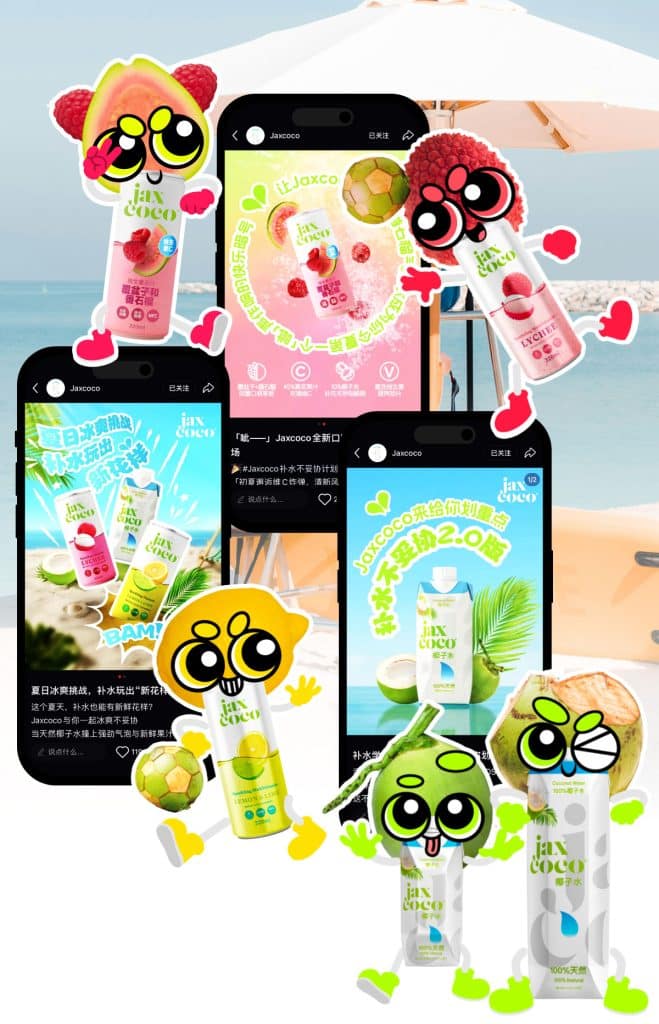
Jax Coco is a premium coconut water recognized for its clean ingredients and wellness-driven brand positioning. It partnered with Sekkei Digital Group to build credibility among health-conscious consumers and establish a consistent digital presence in China’s digital landscape.
Our work covered creator sourcing, editorial direction, and ongoing content supervision to ensure consistent message quality and alignment with local lifestyle trends.
As a result, the campaign generated 172,000+ total views, 2,000+ engagements, and successful collaboration with 20 wellness KOCs.
4. Douyin
How We Use Douyin for FMCG Marketing in China
When launching Douyin marketing campaigns for FMCG brands in China, our objective is to help viewers quickly understand what the product is, how it fits into daily routines, and why it stands out within the category.
Below are the strategies we often deploy using this platform:
- Creator Collaborations: We activate lifestyle, food, wellness, and fitness creators whose audiences already align with the brand’s target demographic. We provide clear messaging frameworks while preserving the creator’s authentic tone.
- Livestream Activations: We plan themed livestream sessions with hosts or creators to demonstrate product use, answer audience questions in real time, introduce limited-edition offerings, and create interactive user engagements.
- Educational Micro-Videos: We break down product or brand benefits in simple, visual-centric video formats. These educational posts can build trust and reduce hesitation, especially for lesser-known categories or imported items.
- Paid Media Amplification: Boosting videos that already show strong watch time and engagement to reach more of the right demographics and interest groups.
- Data-led Content Publishing: Using performance insights to refine posting times, video length, and creative angles so the most effective content formats are repeated and scaled.
What We Avoid in Douyin FMCG Marketing Campaigns
On Douyin, we avoid chasing viral formats that generate views but say nothing meaningful about the product. Pure entertainment that fails to connect back to relevant brand visibility, engagement, or even conversion.
We also try not to repurpose global creative without proper localization. When visuals or brand claims do not align with local expectations, viewers swipe away quickly, and the brand misses the chance to build a distinctive, trustworthy presence in the Chinese market.
Influencer Collaborations for Brand Credibility
Generally, local consumers choose to engage with FMCG brands that feel familiar, culturally aligned, and validated by people they already trust. In China’s digital landscape, creator voices often carry more weight than brand messaging.
We design Chinese influencer collaborations that strengthen credibility across the platforms where local consumers naturally form opinions. By placing the right creators in the right communities, your product benefits feel verified, your brand story becomes clearer, and your presence stays consistent across discovery, comparison, and purchase.
Sourcing and Vetting FMCG Content Creators in China
When building a creator roster for an FMCG brand, we start with the product category, target consumer profile, and consumption patterns. When building a creator roster for an FMCG brand, we start with the product category, target consumer profile, and consumption patterns.
Our influencer sourcing and activation framework includes:
- Category Relevance: Our team prioritizes creators who already produce content related to food, beverages, fitness, beauty, family life, or daily routines aligned with the product. Their audience expects this type of recommendation, which makes the endorsement feel natural.
- KOC and KOL Mix: We combine key opinion consumers for relatable, peer-style reviews with mid-tier and top key opinion leaders when scale and stronger authority signals are needed. This layered structure helps build both authenticity and visibility.
- Audience Quality: In our FMCG marketing campaigns, we analyze engagement patterns, comment depth, and community interaction to ensure the creator’s audience is active and genuinely interested in the category.
- Content Guidance: We provide clear talking points, usage angles, and key differentiators, but we do not force rigid scripts. Creators are encouraged to demonstrate personal routines, reactions, ideas, or comparison experiences in their own voice.
- Platform-Specific Execution: Content is adapted to the platform behavior, whether search-led discovery, short-form video storytelling, or trend-driven community content.
What We Avoid in FMCG Influencer Campaigns in China
We avoid scripted, overly branded content that feels disconnected from a creator’s voice. Chinese consumers are highly sensitive to forced endorsements and will disengage if the collaboration feels transactional.
On top of that, we rarely rely exclusively on large KOLs without KOC support. Without grassroots signals, even high-visibility endorsements struggle to convert awareness into genuine consumer interest.
Our Douyin B2B marketing strategy in China typically involves:
- Building content around industry pain points and “how-to” queries, so videos align with what buyers are already trying to solve, not what the brand wants to announce.
- Activating KOL and KOC creators with credibility in the relevant verticals to validate and align your message with local consumer preferences.
- Running paid media amplification strategically to scale what already performs organically, then retargeting viewers who watched, saved, or engaged to move them closer to enquiry.
SEO & SEM Campaigns for Brand Authority
In China, search plays a critical role in how FMCG brands are evaluated. Before trying a new beverage, snack, or wellness product, consumers often search for reviews, ingredient details, comparisons, and brand background.
For foreign brands, appearing credible within China’s search ecosystem is essential to building trust. In most of our China SEO and SEM campaigns, Baidu remains central to this process.
The platform prioritizes localized domains, compliant hosting, structured Chinese-language content, and consistent presence across Baidu-owned properties. For this reason, we do not rely on overseas hosting or lightly localized pages when running FMCG SEO campaigns in China.
Businesses that rely solely on overseas websites or poorly localized pages often struggle to gain visibility and authority.
How We Execute SEO and SEM for FMCG Marketing Campaigns in China
For FMCG brands, SEO and SEM work together to shape perception and capture intent at different stages of the consumer journey. Organic search establishes legitimacy and discoverability, while paid campaigns amplify high-performing queries and seasonal demand.
Our integrated approach typically includes:
- Localized Chinese landing pages hosted on compliant infrastructure, optimized for speed, mobile experience, and indexability to meet Baidu’s technical expectations.
- Search-driven content creation focused on consumer queries in your industry.
- Active participation in Baidu Zhidao, Tieba, and related forums to address common concerns, clarify misconceptions, and shape early-stage narrative around the product category.
- SEM campaigns targeting branded terms, category keywords, seasonal searches, and comparison queries, ensuring high-intent users encounter accurate, brand-controlled messaging.
- Ongoing keyword refinement using reliable data from official sources, identifying which search clusters drive meaningful engagement and sustained visibility rather than short-term traffic spikes.
Digital Advertising Strategies for Broader Audience Reach
Unlike traditional push marketing, paid media in China works best when it reinforces the same signals consumers encounter across social platforms, creator content, and search results.
The objective is not only to raise visibility but to help consumers clearly understand what the product is, why it matters, and how it fits into their lifestyle.
We approach digital advertising for FMCG brands as part of a unified ecosystem. Every campaign is designed to strengthen brand presence across moments of curiosity, validation, and early consideration.
How We Execute Digital Advertising for FMCG Brands in China
For foreign FMCG brands, we use digital advertising to do two things exceptionally well: rapidly scale brand awareness and guide interested consumers toward deeper product understanding.
Our recommended digital advertising strategies for FMCG brands in China are:
- Search-driven Advertising: We capture intent from users actively looking for product categories, benefits, or brand names after seeing creator or social content. This reinforces credibility during validation.
- Content Amplification Campaigns: Instead of creating disconnected ad creatives, we amplify high-performing influencer or brand content that has already proven engagement value.
- Event-driven Media: Launching ads around seasonal peaks, limited releases, or cultural moments to maximize visibility during high-consumption periods.
- Interest-based Audience Targeting: Campaigns are segmented by lifestyle signals to ensure messaging aligns with actual FMCG consumption patterns.
What We Avoid in FMCG Digital Advertising Campaigns in China
We avoid running ads that rely solely on global creative assets or messaging that does not match Chinese cultural expectations. Ads must feel native to the platform, not adapted from a foreign campaign.
Foreign brands should also avoid treating digital ads as a standalone strategy. When ads are not tied to influencer activity, search visibility, or ongoing social content, performance quickly flattens.
Challenges Foreign Brands Face When Launching FMCG Marketing Campaigns in China
1. Speed of Market & Trend Cycles
In 2025, total FMCG spending in China showed a positive trend after several years of decline.
Given that some of this increase is largely driven by online consumption, it’s clear that discovery, evaluation, and purchase decisions are happening faster than ever. Trends emerge quickly, peak quickly, and fade just as fast.
For foreign brands, this creates pressure on multiple fronts, including short product-relevance windows, rapid content turnover, and instant consumer feedback loops.
Brands that move too slowly in adapting messaging, creative formats, or campaign timing risk missing the momentum entirely.
2. Consumer Trust & Social Proof
Chinese consumers rarely rely solely on official brand messaging when evaluating FMCG products. They look for reviews, user-generated content, creator recommendations, and peer commentary before forming opinions.
For foreign brands without an established local presence, this presents a credibility gap. Even globally recognized products must rebuild trust within China’s social ecosystems.
Without consistent KOC and KOL validation, search presence, and visible engagement, brand claims may feel distant or unverified.
3. Platform Fragmentation and Complexity
China’s digital landscape is highly fragmented, with different platforms serving distinct roles in the consumer journey. Discovery, product research, social validation, and purchase decisions may occur across platforms such as Xiaohongshu, Douyin, WeChat, and major e-commerce marketplaces.
Each ecosystem operates with its own content formats, algorithms, advertising systems, and user behaviors. As a result, FMCG campaigns often require coordinated strategies across multiple channels rather than relying on a single platform.
Our China FMCG Marketing Framework for Foreign Consumer Brands
A successful FMCG marketing campaign in China usually comes down to three things: can consumers recognize your brand, do they trust it enough to try it, and does your messaging stay relevant as trends shift quickly?
To address these challenges, our China FMCG marketing framework focuses on structured brand positioning, platform-specific content activation, and sustained trust-building across China’s fragmented digital landscape.
Market Positioning & Competitive Mapping
Before we launch campaigns, we define where your brand can realistically promote and compete within China’s FMCG landscape. That means understanding how your category behaves locally, because consumer demand is often shaped by local habits, seasonality, and regional differences more than most foreign teams expect.
We also map the digital-first consumer journey, which often includes heavy validation, social proof, and comparison behavior that manifests in both content consumption and search behavior.
What we assess before moving forward:
- Category growth velocity and seasonal consumption spikes within China.
- Regional preference differences across Tier 1, Tier 2, and lower-tier cities.
- Competitor messaging angles and claim patterns used domestically.
- Consumer review sentiment themes and complaint triggers.
- Regulatory feasibility of product claims under China’s advertising law.
Brand Localization & Messaging Adaptation
FMCG consumers respond to messaging that reflects local lifestyle aspirations, ingredient familiarity, and culturally relevant value propositions. We refine your brand story to align with how Chinese consumers interpret quality, safety, and functionality.
It requires adjusting the hierarchy of claims, tone of voice, and visual presentation to match domestic expectations and platform content norms.
Our localization and adaptation process for FMCG marketing in China includes:
- Reframing core selling points to align with Chinese consumer motivations.
- Ensuring claim compliance with Chinese regulatory review standards.
- Aligning messaging with emerging consumer trends, such as health awareness or ingredient transparency.
- Avoiding culturally sensitive missteps in symbolism or wording
Channel Selection & Strategy
Channel selection is determined by industry maturity, target demographic, and purchase decision complexity. Rather than defaulting to every available platform, we design a structured ecosystem where each channel plays a defined role in awareness, validation, or conversion influence.
We synchronize organic content, paid media distribution, and influencer activations into a single campaign calendar. Upper-funnel exposure builds brand recognition and education, while lower-funnel activations reinforce social proof points and encourage product trial consideration.
Influencer Activation Model
Influencer marketing in China is structured, tiered, and data-driven. We match creator selection to category maturity and brand stage. Established FMCG categories benefit from authority-driven endorsements, while emerging products often require broader credibility seeding before scale.
KOC activations generate authentic product trial signals and review density, while mid-tier and top-tier creators amplify brand positioning. Sequencing across multiple waves ensures the product appears consistently in consumer evaluation journeys rather than as a one-time exposure.
Example of Influencer Tier Alignment in China:
| FMCG Brand Category | Recommended Creator Mix | Primary Objective |
|---|---|---|
| Emerging / New to China | High-volume KOC seeding | Build review density and local credibility |
| Growing / Competitive | Mid-tier KOL integration + KOC supporting content | Strengthen authority and differentiation |
| Established / Premium | Top-tier KOL endorsement + retargeted KOC content | Reinforce positioning and scale visibility |
Paid Media Investment & Performance Architecture
Paid media in China’s digital landscape requires precision targeting and rapid optimization. Algorithm behavior can shift quickly, and ad review systems may restrict delivery if creatives trigger violations. Campaigns must be structured with contingency planning and continuous oversight.
We design ads that align creative variations, audience segmentation, and budget distribution to maintain stable cost efficiency throughout the campaign.
Our paid media structure includes:
- Audience segmentation based on behavioral intent.
- Creative testing cycles to identify resonance patterns.
- Budget redistribution based on engagement depth.
- Compliance checks before scaling.
- Real-time bid adjustments to maintain cost efficiency.
Reporting, Insights, and Continuous Optimization
We keep reporting straightforward and action-focused. Instead of long decks, we summarize what worked, what didn’t, and what we are changing next based on data from China’s market signals and campaign performance.
Our goal is to ensure every cycle improves the next, without overloading your team with unnecessary documentation.
Successful FMCG Marketing Campaigns We Launched in China
RIOJA
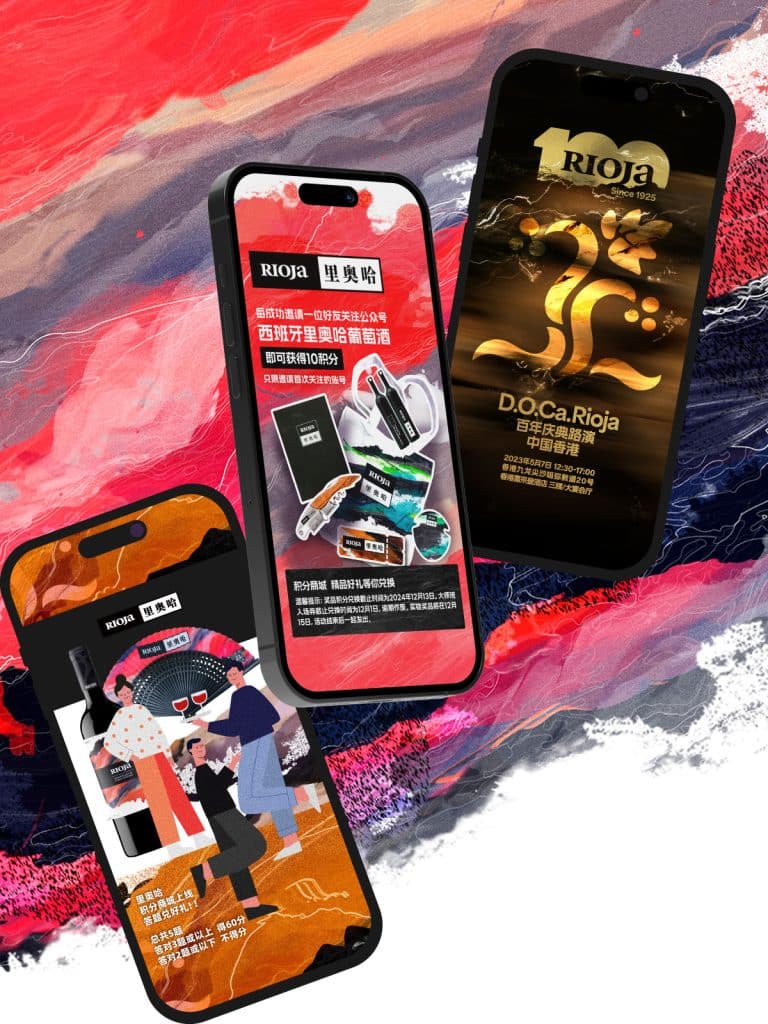
Rioja partnered with our team to establish and grow its digital presence in China. As one of Spain’s most recognized wine regions, the brand needed localized visibility and sustained engagement on Chinese social media platforms.
Solutions We Executed
For this marketing campaign, we launched and managed Rioja’s official WeChat presence, developed an interactive mini-program, and executed O2O social activations that connected digital engagement with offline wine-tasting events.
Campaign Outcomes
The long-term campaign strengthened Rioja’s digital foundation in China and generated steady community growth.
+10,000
new followers
432
posts published
42
campaigns launched
Yellow Tail
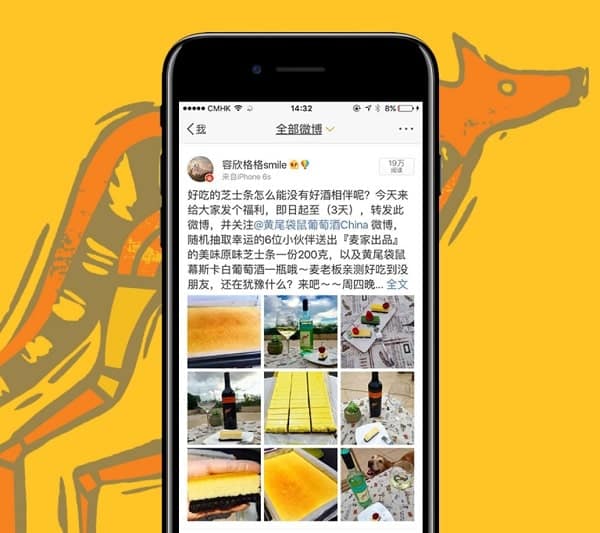
Yellow Tail approached SDG to regain control of its fragmented digital presence in China. While the brand already had recognition, most online mentions were user-generated, limiting its ability to guide brand perception and engagement.
Solutions We Executed
For this campaign, we strengthened Yellow Tail’s Baidu presence by improving branded search visibility and replacing outdated content.
We launched and managed official WeChat and Weibo accounts with structured publishing schedules and partnered with a food KOL to drive follower growth through a short-term competition campaign.
Campaign Outcomes
The integrated strategy improved reputation signals and expanded brand reach across Chinese platforms.
250,000+
impressions from KOL activation
83,000+
impressions from Weibo seasonal campaign
Improved
Baidu search visibility and brand credibility
LEFFE
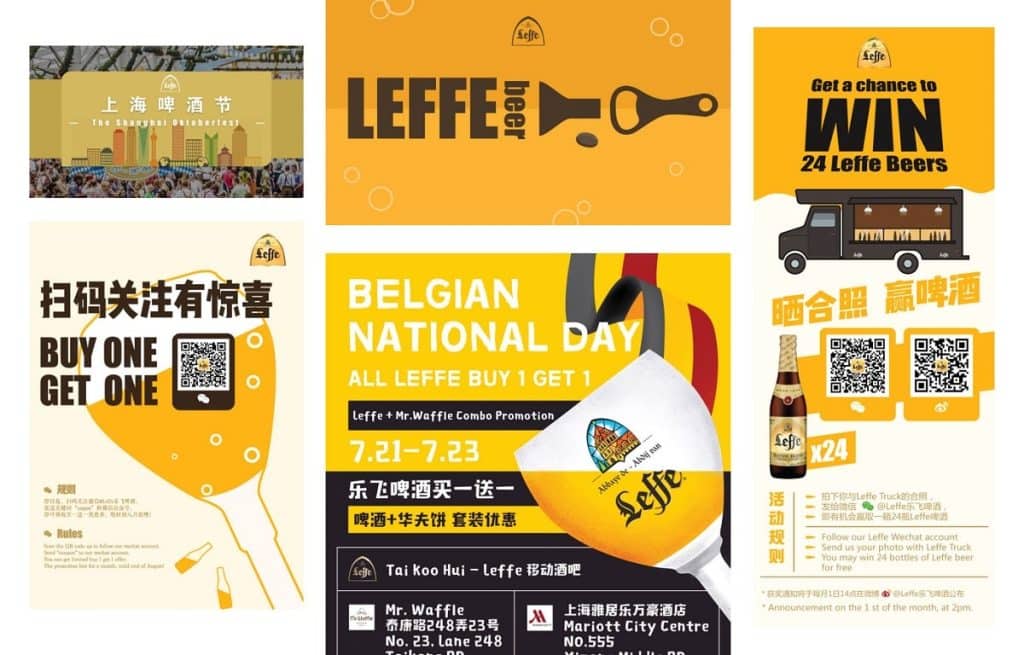
Leffe worked with our team to increase brand visibility and engagement in China’s competitive beer market. With rising interest in specialty beers, the brand needed localized digital activations tied to a key cultural event.
Solutions We Executed
We strengthened Leffe’s WeChat presence through strategic content publishing and interactive mechanics leading up to Shanghai Oktoberfest. We created branded visuals, ran ticket and product giveaways, and encouraged reposting and user participation to expand organic reach.
Campaign Outcomes
The campaign generated strong engagement and increased visibility during a key seasonal moment.
Increased
brand visibility during Shanghai Oktoberfest
Hundreds
of user messages and interactions
High
participation in giveaway mechanics
Plan Your Next China FMCG Marketing Strategy with SDG
China’s consumer market is competitive, regulated, and driven by social proof. Brands that succeed in this landscape are those that localize effectively and establish trust across search, social, and community-driven platforms.
At Sekkei Digital Group, we design FMCG marketing strategies grounded in local insight, regulatory awareness, and hands-on execution across China’s major digital ecosystems. Get in touch and let’s discuss how we can position your brand for long-term growth in China.
LEAVE A MESSAGE OR
ADD US ON WECOM:
