


Influencer Marketing in China:
What Works and How We Execute
Chinese consumers engage with brands in ways that go far beyond traditional advertising, which makes executing influencer marketing in China more complex, even for the most successful brands already popular globally.
Having worked directly in this landscape for years, our team has helped foreign businesses source reliable KOCs and KOLs through the right sourcing channels, vetting framework, and execution process.
This determines the creators we activate, the platforms we prioritize, the regulations we consider, and the strategies we deploy in the Chinese market. Get any of them wrong, and the campaign stalls fast, even with a strong brand behind it.
How Important Is Influencer Marketing in China’s Digital Landscape?
In China, the influencer marketing space continues to be a reliable channel for foreign brands seeking local visibility and trust. As Chinese users rely heavily on creator content when deciding what to buy online, this strategy becomes highly effective at shaping consumer behavior.
Many shoppers discover products through this type of word-of-mouth content long before visiting a brand page. Here are some recent stats that clearly show the importance of influencer marketing in China:
85%
of Chinese consumers purchased a product after seeing an influencer use it.
1 in 3
Chinese consumers browse social media to shop online.
40%
of all skincare purchases in China are driven by KOLs and KOCs.
With this much consumer trust in influencer content, foreign businesses entering the Chinese market can no longer rely solely on brand claims and traditional advertising. If you skip it, you lose brand discovery, validation, and search visibility inside the most used platforms in China.
How We Source and Vet Creators for KOL Marketing Campaigns in China
Successful KOL marketing in China begins well before the launch of the campaign. If our creator selection is wrong, no brief, edit, or additional media spend will fix it.
That’s why we focus less on follower count and more on creator fit. This means evaluating how well an influencer matches the target platform, category, audience intent, and campaign goal.
Here are some factors we assess before officially onboarding KOLs in China:
- Traffic authenticity and quality (Are their engagements and views coming from our target audience in China?)
- Cross-platform amplification (Does the creator have the ability to extend campaign reach beyond one app through Weibo, Xiaohongshu, Douyin, or WeChat?)
- Category authority in China (How do they influence Chinese consumers in your category when they compare and evaluate options?)
- China compliance and readiness (Is the KOL capable of following local ad regulations, claim sensitivity, prohibited wording, and platform review expectations?)
China KOL Marketing
Case Example
Marriott Vacation Club sought Sekkei Digital Group’s help to source and vet 30 top travel and lifestyle KOLs in China. These influencers were sent to the resorts in Bali and Phuket to create content highlighting membership perks exclusive to Chinese tourists.
Beyond coordinating these trips, we managed the campaign from providing editorial guidelines to supervising content creation and publishing schedules. This strategy generated 1.2 million views and 14,000 engagements for the brand.

Key Platforms for
Influencer Sourcing in China
China’s influencer ecosystem is highly platform-governed. As a result, our KOL sourcing process is often anchored in official collaboration systems and the verified data they provide.
These tools allow us to evaluate real performance signals, pricing benchmarks, and creator availability. Without the verified data from these platforms, you are only selecting KOLs based on surface metrics, which is exactly how budgets get misallocated in China.

Pugongying (蒲公英)
Pugongying is Xiaohongshu’s official brand-creator collaboration system. It’s one of the most important tools for influencer marketing in China, especially for lifestyle, beauty, wellness, travel, and consumer brands.
We use Pugongying to:
- Identify creators by content category, audience demographics, and past brand collaborations.
- Review historical note performance, including saves, comments, and interaction quality.
- Assess how often a creator publishes sponsored content and whether their audience reacts positively.

Xingtu (星图)
Xingtu is Douyin’s certified influencer management platform. It’s a critical sourcing channel for performance-driven KOL campaigns, including short-video activations and livestream e-commerce.
Our team typically considers using Xingtu to:
- Filter creators by vertical, format strength, and commerce capability.
- Analyze engagement consistency across videos rather than a single viral post with high traction.
- Evaluate livestream performance data when conversion is part of the objective.

Weirenwu (微任务)
Weirenwu is Weibo’s official influencer marketplace and remains valuable for large-scale awareness campaigns, trending topics, and amplifying public conversation.
We typically source through Weirenwu when:
- The campaign requires hashtag integration or trending topic visibility.
- Brands want fast and direct exposure during launches or events.
- KOL credibility and public digital presence matter more than a deep product or brand explanation.

Huahuo (花火)
Huahuo is Bilibili’s official brand collaboration platform and is especially effective for game marketing strategies, tech, and long-form educational content.
When sourcing creators through Huahuo, we assess:
- Content depth and audience retention.
- Ability to host or support livestreams.
- Community interaction quality, including fan discussions and repost behavior.
Trusted MCNs
In addition to official platforms, we work closely with trusted MCNs (Multi-Channel Networks) and independent creator pools built through long-term collaboration. In China, an MCN is a creator management agency that recruits, trains, and manages influencers, negotiates commercial terms, and helps coordinate production and campaign delivery at scale.
We use this channel to access niche creators who may not be actively listed on marketplaces, and to execute campaigns that require volume, broad livestream operations, or complex deliverables.
That said, MCN representation alone does not guarantee content quality. Every creator sourced through an MCN still goes through the same vetting standards as platform-sourced talent.
Common KOL Campaign Failures Foreign Brands May Encounter in China
1. Focusing on the Wrong Chinese Social Media Platforms
In China, many KOL campaigns fail because brands choose social media platforms they recognize rather than where real influence occurs in their category.
Douyin, Xiaohongshu, Weibo, Bilibili, and WeChat belong at different stages of the local user journey, so great content on the wrong channel often reaches people who are not ready to search, compare, or buy.
We solve this through:
- Mapping platforms to funnel stages before sourcing creators.
- Deciding whether the campaign’s job is discovery, validation, or conversion.
- Choosing KOLs whose content style already matches how users behave on that platform.
2. Mistakes on Contract and Usage Rights
The influencer economy in China is highly professionalized. If you want to integrate influencer assets into your broader marketing strategy, your advice should be: lock down rights early.
Common oversights on KOL marketing agreements:
- Assuming paid usage rights are included.
- Skipping timelines, platforms, and amplification clauses.
- Unclear exclusivity and competitor restrictions.
- No revision and approval structure
How do we prevent these issues?
We build a China-specific contract checklist before outreach, aligned with platform norms and typical MCN/KOL terms, and confirm the usage scope (duration, channels, whitelisting/paid amplification, and edit permissions) in writing before the creator is enrolled.
We also set a clear approval workflow and delivery timeline upfront, so the campaign stays compliant with platform review rules and avoids last-minute renegotiation.
3. Poor Sourcing and Creator Mix
When working on influencer campaigns in China, we often tell our clients that what we’re sourcing is more than posts from social media influencers. While it is tempting to collaborate with top KOLs for their broad reach, relying on a single creator tier usually limits impact.
Campaigns struggle when:
- Relying solely on top-tier KOLs creates a visibility spike but no depth. China’s platforms require layered content ecosystems, and single-tier activations rarely convert.
- Insufficient supporting content leaves users without the social proof needed to move from interest to action. On platforms such as Xiaohongshu and Douyin, the gap between hero posts is viewed as a credibility issue.
- No defined creator roles across the funnel results in disjointed messaging. In China, KOLs anchor authority, mid-tier creators sustain momentum, and KOCs validate authenticity. Skip one layer, and performance drops.
In short: Without the right sourcing channels, a compliant selection process, and a tiered creator structure, influencer campaigns in China will consistently underperform.
How We Source and Vet Creators for KOC Marketing Campaigns in China
KOC marketing works in China because users evaluate these creators as peers, not brand ambassadors. That’s why we look for KOCs who align with the platform’s algorithmic norms and can integrate products naturally without compromising audience trust.
Before onboarding anyone, we review their content behavior, commercial history, and whether their audience matches the brand’s target market. This ensures every selected creator can influence real purchase intent across Chinese social media platforms.
What we check:
- Target audience alignment on age, gender, and city tier based on platform insights.
- Feeds still dominated by organic posts, with limited recent sponsored content.
- Category relevance on Chinese platforms (past posts match how local users search, engage, share, and save content.)
- Brand safety checks (controversies, off-brand language, risky topics, etc.)
- Visual and tone consistency (looks native to the platform, not brand-shot creative.)
China KOL Marketing
Case Example
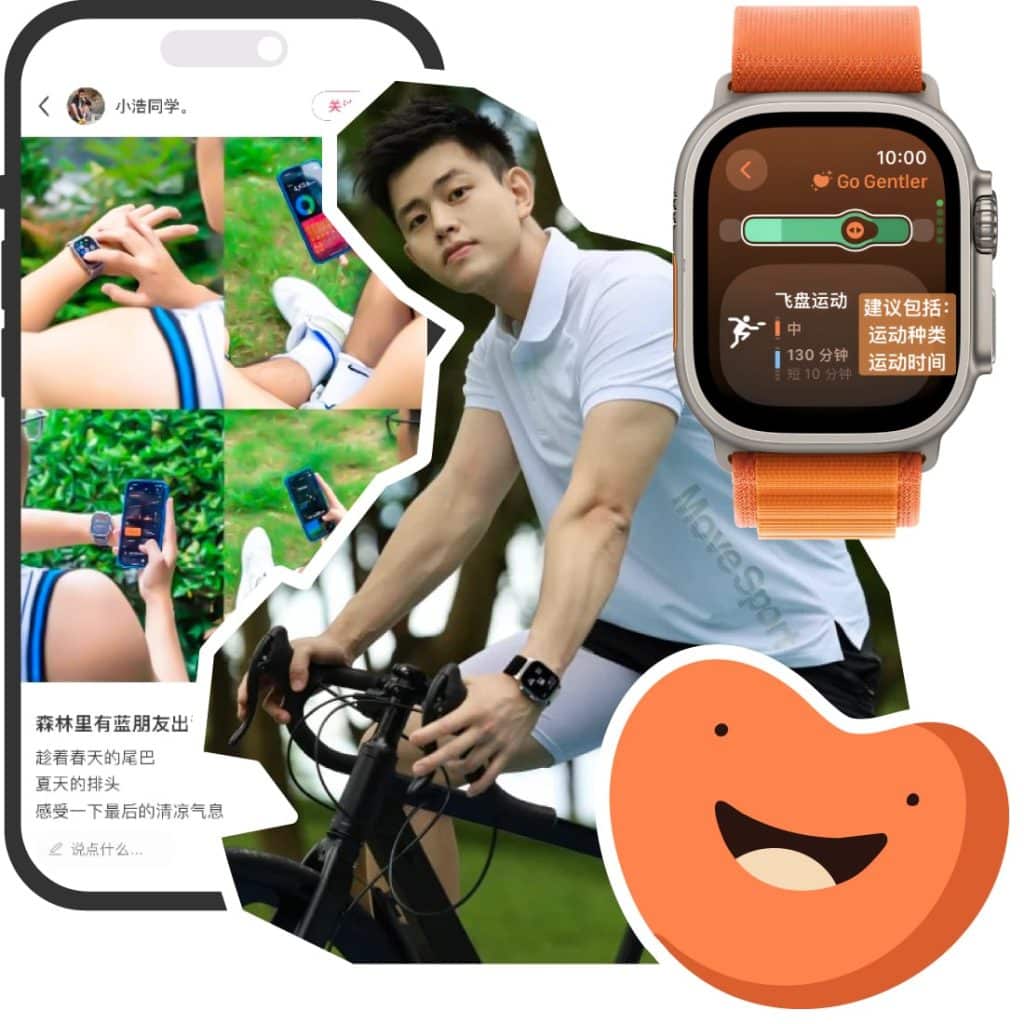
For Gentler Streak, our team carefully vetted and enrolled 22 fitness and lifestyle KOCs on Xiaohongshu. Instead of hard-selling the app, our content strategy focuses on demonstrating how it fits into their daily workout routines.
By focusing on key opinion consumers and targeting their vertical audiences in the Chinese market, Gentler Streak generated more than 10,000 authentic engagements and over 1 million views.
Why Some KOC Campaigns in China Underperform
Fake or Inflated Followers
Like other global markets, China’s influencer landscape faces the common problem of fabricated traffic. Some KOLs and KOCs (including celebrities) succumb to the temptation to inflate their follower counts and engagement metrics because brands tie payments and renewals to KPIs.
We actively exclude any influencer with sudden follower spikes or bot-like comments. Only creators with organic growth and genuine user engagement are chosen during the sourcing and vetting process.
Poor Brand Alignment
In China, KOCs are trusted because they are perceived as selective. When a creator’s feed is overloaded with unrelated brand pushes, credibility erodes fast, especially on Xiaohongshu, where users expect lifestyle continuity from virtual influencers.
We prevent this by:
- Reviewing historical posting ratios and category focus.
- Avoiding creators running overlapping competitor or off-category promotions.
- Matching product positioning to how the KOC typically shares personal experiences.
Weak Creative Direction
Loose or generic briefs almost always lead to forgettable content. We share clear yet flexible creative guidelines covering key messages, must-use hashtags, platform formats, and tone of voice, so KOCs can showcase the product’s value in a way that remains native to their style.
KOL vs KOC Marketing in China:
Differences in Strategy and Execution
Not all Chinese influencers affect purchase decisions the same way. Key opinion leaders drive long-term brand narrative and recall, while key opinion consumers build the social proof needed to move engaged audiences toward conversion.
The table below highlights the differences between Chinese KOCs and KOLs, which our team considers highly during campaign planning.
| Category | KOL Marketing (Key Opinion Leaders) | KOC Marketing (Key Opinion Consumers) |
|---|---|---|
| Primary Role | Build awareness, shape brand narrative, create hero assets. | Build trust, provide social proof, and influence purchasing decisions. |
| Audience Perception | Seen as professionals or semi-celebrities producing commercial, sponsored content. | Seen as real users sharing personal experiences. |
| Best Time To Use | Product launches, brand repositioning, educating target audiences, and large-scale promotions. | Seeding, review generation, and strengthening mid-funnel validation. |
| Execution Volume | Low volume, few high-impact posts. | High volume, many small creators publishing in waves. |
| Brand Control | Tight control needed over messaging and campaign angles. | Loose control to preserve authenticity and platform-native voice. |
| Cost Structure | High fees, usage rights often negotiated, and limited slots. | Lower fees or product-only, scalable to multiple content creators. |
| Risk Factors | Oversaturation, misalignment with target audience segments, and compliance issues. | Low individual risk but requires strong screening and moderation for effectiveness. |
| Ideal Funnel Stage | Top of funnel: awareness and positioning. | Mid to bottom funnel: evaluation and purchase intent. |
| Longevity of Impact | Short bursts of high visibility. | Long-term compounding effect through many discovery points. |
When to Use Both KOLs and KOCs in Your China Influencer Campaign
Combining KOL and KOC strategies in China provides foreign brands with a full-funnel marketing approach, from initial exposure to conversion.
KOLs anchor high-impact hero content that explains the brand and frames how consumers should see it. KOCs then extend it through consumer reviews and social proof, where purchase decisions actually happen.
Typical execution campaign flow we use for KOL and KOC creator mix involves:
- KOLs publishing the anchor story to explain brand values, demonstrate usage.
- KOCs publishing seeding content in waves to reinforce credibility and relevance.
- Paid media boosting both for retargeting and exposure from multiple platforms.
- Monitoring and feedback to guide creative and technical adjustments.
Our Influencer Marketing Execution Framework in China
Executing influencer marketing in China requires far more than creator outreach and content publishing. The ecosystem is platform-driven, compliance-sensitive, and highly responsive to real-time user feedback.
Based on our experience managing campaigns, we follow an execution framework designed to reduce risk, maintain control, and compound performance.
Phase 1: Creator Filtering & Sourcing
We begin sourcing through official influencer platforms because they provide verified data, transparent pricing, and compliance safeguards. It allows us to filter creators by category, audience profile, posting behavior, and historical performance of branded content.
Extending sourcing through trusted MCNs
Once a shortlist is formed, we selectively engage trusted Chinese MCNs to expand scale or access creators who are not actively visible on official platforms.
However, MCN-sourced creators must go through the same vetting process. We recommend independently validating data, content history, and operational reliability before confirming their participation in the campaign.
Phase 2: Campaign Briefing and Content Direction
Under China’s Internet Advertising Measures, KOL and KOC content presented as “consumer reviews” that include a purchase method must be clearly identified as advertising.
When messaging, disclosure, or tone is misaligned, Chinese platforms may flag content during review, limit distribution, delay approvals, or remove posts entirely. Our role as a China influencer agency is to prevent this from happening by setting clear, compliant campaign direction without scripting the creator’s voice.
Content formats are selected based on platform mechanics and user intent, not creative preference. We usually work with a combination of formats rather than relying on a single asset type.
Common formats include:
- Short-form videos for fast discovery and feed exposure.
- Livestream sessions for product explanation and real-time interaction.
- Structured media-integrated content (text + visuals + video) designed for search indexing, saves, and repeat discovery.
- Follow-up posts or comments to address audience questions
Phase 3: Campaign Management & Monitoring
During the campaign, we continuously track performance and optimize. We use both in-platform analytics and third-party tools to monitor KPIs. Key metrics include engagement rate (likes/comments), reach/impressions, and conversion actions (clicks, app downloads, or sales).
Our campaign management process includes whether creators are following briefs, whether platform algorithms are picking up content as expected, and how audiences are reacting.
Successful Influencer Marketing Campaigns We Launched in China
Riftstorm
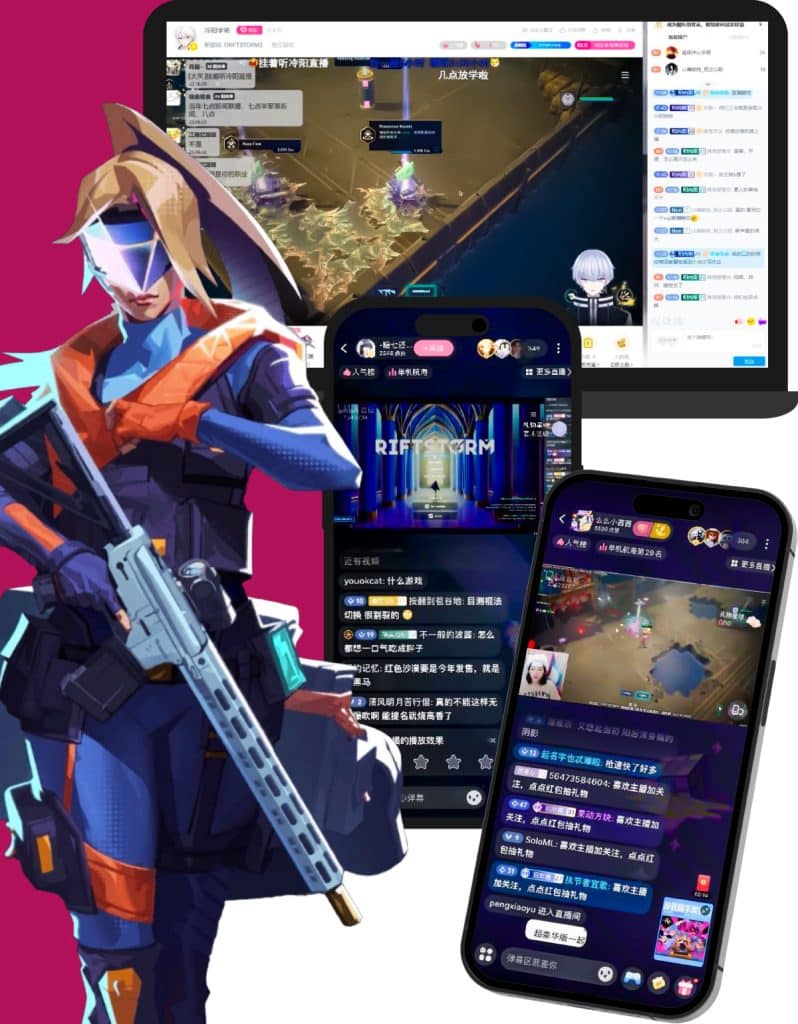
Riftstorm needed early traction during its pre-alpha phase. In this campaign, our priority was to showcase gameplay depth and visual identity to resonate with Chinese gaming communities and drive real-time engagement and early fan interest.
Platforms We Used
We anchored this campaign on Bilibili because its gaming audience is highly engaged and comfortable with longer, detailed content.
Solutions We Executed
The team sourced and enrolled three Chinese gaming content creators to livestream the pre-alpha build. From there, we developed editorial guidelines, provided real-time support during the sessions, and submitted post-stream reporting to help developers better understand their target audience.
Campaign Outcomes
Even with a tight creator roster, the campaign we launched delivered strong early attention and unusually high interaction, which is what we look for in pre-launch game activations.
40,000+
total views
47,000+
total engagements
Jax Coco
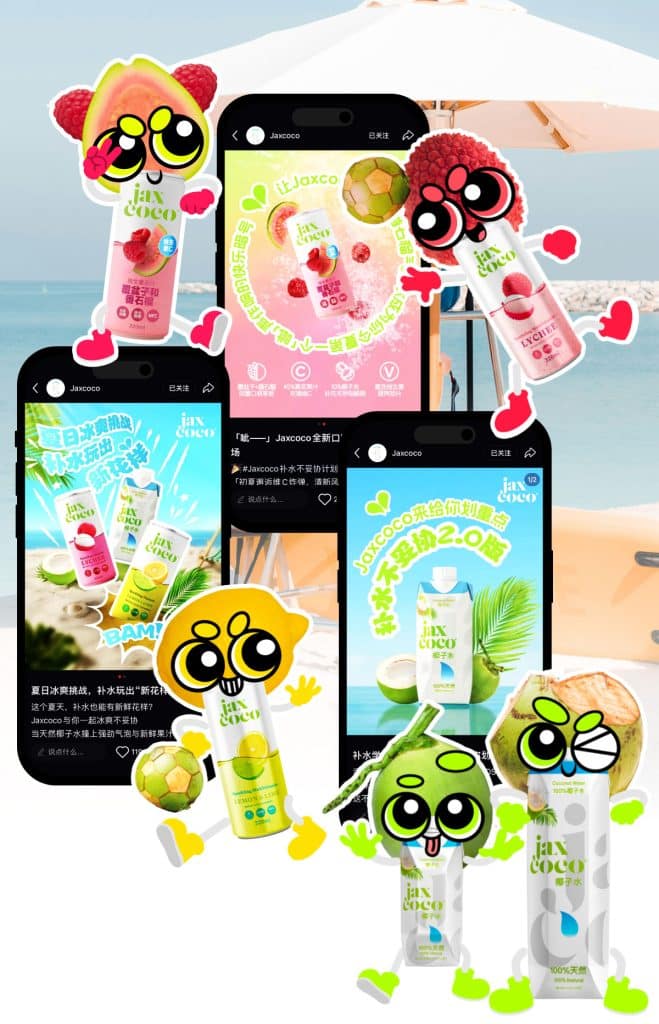
Jax Coco was preparing to enter China’s crowded health and wellness beverage market. We needed to make the product feel culturally and visually native on Xiaohongshu, while communicating its differentiation without relying on a foreign brand narrative.
Platforms We Used
We centered the activation on Xiaohongshu, where wellness-driven consumers rely heavily on lifestyle content, peer recommendations, and KOC storytelling to validate purchase decisions.
Solutions We Executed
Our influencer campaigns for Jax Coco began by sourcing 20 lifestyle, fitness, and wellness KOCs who were already producing health-related content. The content themes for these posts include gym routines, afternoon refreshers, home workouts, and beauty-linked hydration, which resonate with our target audiences.
Campaign Outcomes
The campaign successfully seeded Jax Coco into a competitive wellness category, giving the brand visibility among the exact audience segments it needed to influence.
172,000+
views from high-intent users
2,000+
user engagement
Where We Launch Campaigns for Influencer Marketing in China
1. Xiaohongshu
Visual-Centric | Content Discovery | Community-Driven Credibility
Xiaohongshu is one of the most suitable Chinese platforms for building long-term trust among young, educated, and consumption-focused audiences, particularly in beauty, wellness, travel, and FMCG.
Best for campaigns that involve:
- Seeding authentic product experiences.
- Targeting Gen Z and millennial audiences in tier 1 and 2 cities in China.
- Supporting mid-funnel discovery with niche-specific KOC content.
- Sustaining search visibility through multiple keyword-targeted posts.

When not to use Xiaohongshu for influencer marketing
The platform is not suitable for every brand or objective. It underperforms when you need direct traffic to external sites (since Xiaohongshu restricts external links) or when your messaging relies on bold claims or pricing incentives.
Brands that expect hard-selling or rapid conversion behavior will not easily achieve their goals with a community-centric platform like Xiaohongshu.
2. Douyin
Short-Form Video | Livestream Commerce | Conversion Funnel Acceleration
Douyin is the dominant short-video platform in China and a central channel for influencer-led commerce. It’s optimized for high-tempo product demos, short-form storytelling, and livestream conversion.
Best for campaigns that involve:
- Shoppable content and livestream commerce.
- Rapid testing of multiple creative angles.
- Viral-style storytelling that captures attention instantly.

When not to use Douyin for influencer marketing
We recommend avoiding Douyin for high-consideration products with long decision cycles and for marketing campaigns that require nuance, long-form explanations, or community dialogue.
Brands without proper product listings may also see fewer engagements, as users expect to buy your products directly on branded Douyin stores.
3. Weibo
Microblogging | Trend Amplification | Mass Awareness
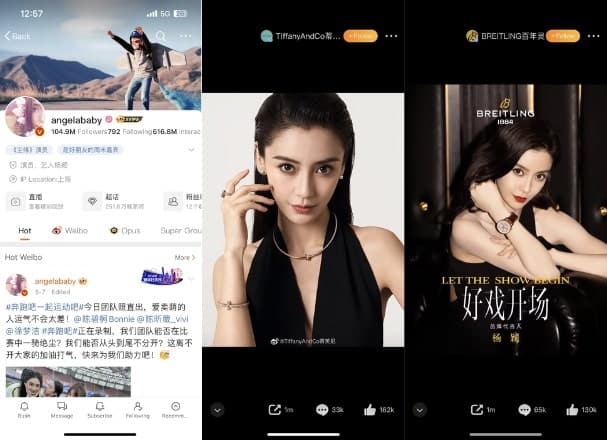
Weibo remains highly useful for mass awareness, amplifying trending topics, and short-cycle PR-style campaigns. Its power lies in reach, virality, and influencer-driven news moments, but it’s rarely the final step in a conversion funnel.
Best for campaigns that involve:
- Launch announcements, press releases, and product launches.
- Celebrity partnerships and event tie-ins.
- Campaigns designed around hashtags, trending keywords, or national holidays.
- Social listening activations and earned media triggers.
When not to use Weibo for influencer marketing
Using Weibo is not ideal when the campaign goal requires deep trust or long-form education. It also won’t work that well if you’re looking to gain traction from peer-style validation or if your target demographic is younger and more visually driven.
4. Bilibili
Long-Form Video | Livestream Engagement | Gaming and Tech Audiences
Bilibili is where young, niche-driven audiences consume long-form video and live content, especially in gaming, tech, education, and anime subcultures. KOLs and KOCs here are often referred to as UP主 (uploaders) and function more like creators than promoters.
Best for campaigns that involve:
- Demonstrating gameplay, app features, or complex mechanics.
- Educating users on tech, hardware, or software.
- Building community-driven engagement with younger digital natives.

When not to use Bilibili for influencer marketing
Bilibili is not the right platform if your campaign is built around quick conversions, transactional offers, or short seasonal sales promotions.
It is also a poor fit if you cannot support the content demands. Most Bilibili campaigns perform best when a creator has access to strong media assets and can allocate resources to pre-production, editing, and publishing.
How Chinese Influencer Marketing Campaigns
Work Differently By Industry
Travel and Hospitality
For travel marketing campaigns in China, you are not just selling a room or a ticket. You are shaping where people want to go, what they want to do, and how they want to feel when they get there.
That means you plan your content creator strategy around trip planning-intent keywords and itinerary behavior, because Chinese travelers rely heavily on social content for inspiration and decision-making.
Here are some of our campaign recommendations to maximize influencer content for travel brands:

- Time campaign releases around or before peak seasonal travel periods (e.g., CNY, Golden Week, May Day Holiday) and visa policy updates.
- Integrate OTAs such as Ctrip, Qunar, and Fliggy into your influencer content to drive direct conversions.
- Design for downstream conversion: align the itinerary guides with the actual booking paths you can support (OTA, WeChat inquiry, mini program, or official account follow).
FMCG
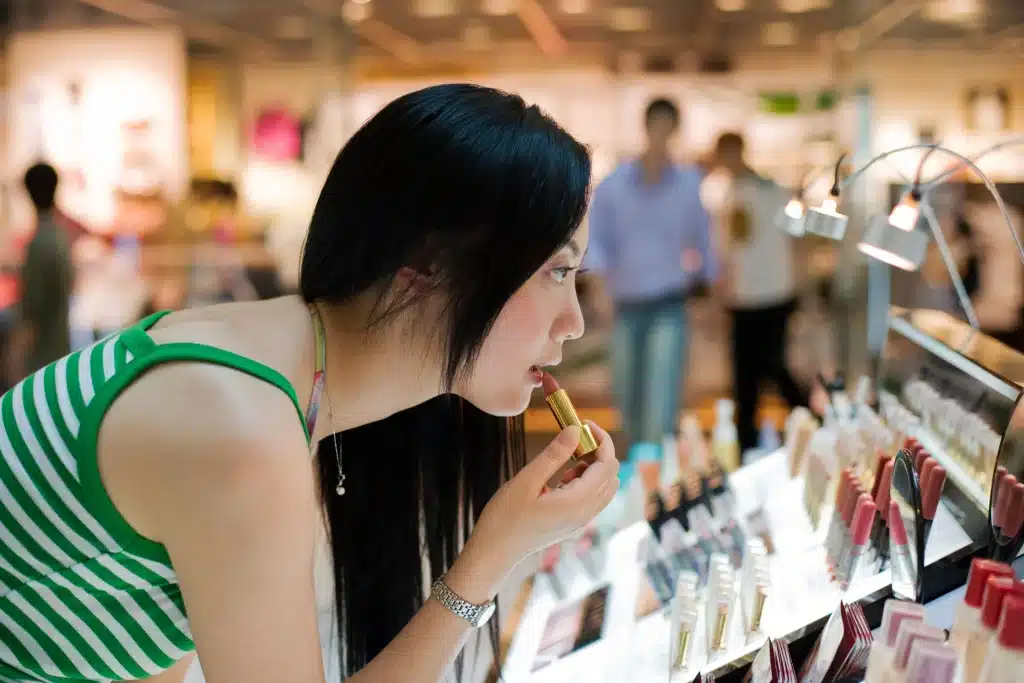
Fast-moving consumer goods campaigns are a volume game with creative speed and shopper psychology at its core. The Chinese consumer is exposed to hundreds of products daily via short videos, livestreams, and seeding posts.
To stand out, content must spark immediate emotional or functional resonance and direct users to platforms where they can purchase right away.
Here are some of our campaign recommendations to maximize influencer content for FMCG brands:
- Prioritize micro-creators who mirror your target shopper demographic.
- Build the seeding matrix first, then recruit KOCs who already post in adjacent routines related to your products.
- Use official sourcing and management infrastructure when possible to reduce mismatch risk.
Gaming
Game marketing strategies in China are community-driven. Players listen to creators not only to decide whether to install a game, but also to learn meta strategies, stay up to date, and participate in events.
Bilibili is particularly important for mid- to hardcore audiences thanks to its long-form videos, streams, and bullet comment culture, while Douyin targets a more casual, mobile-focused audience.
Here are some of our campaign recommendations to maximize influencer content for game-related brands:

- Map creators by genre fit, because gaming audiences in China are massive and segmented.
- Provide early access builds, exclusive codes, or cosmetic items to help KOLs create content that feels insider and valuable to their communities.
- Encourage creators to surface honest feedback, then integrate those insights into future updates to show that you listen.
Ready to Plan Your Advertising Strategy in China?
For foreign brands aiming to succeed in China’s digital ecosystem, influencer marketing remains a high-impact strategy. However, your campaign’s success depends on more than choosing a popular KOL or KOC.
You need an in-depth understanding of how local consumers engage with influencer content and how platforms regulate these posts.
At Sekkei Digital Group, we build our strategies around local insights, data-driven execution, and full compliance with Chinese platform regulations. Contact us today to discuss how we can support your brand in your next influencer campaign in China.
LEAVE A MESSAGE OR
ADD US ON WECOM:
