

China Advertising for Foreign Brands:
How We Made It Work
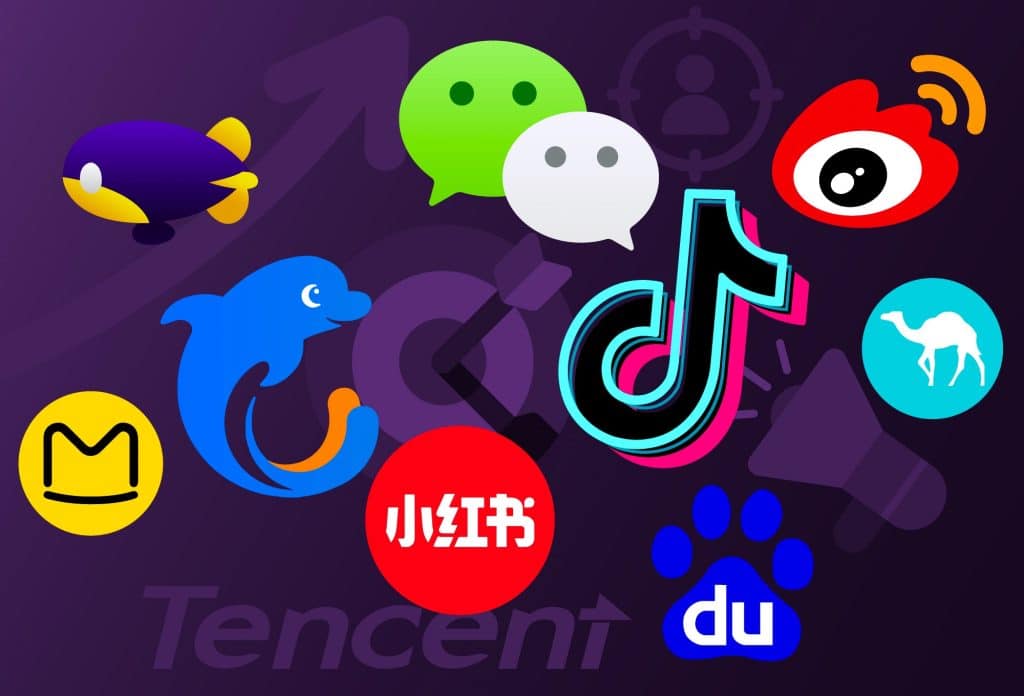
The Chinese market operates within a distinct digital advertising ecosystem dominated by domestic players, including Baidu, Alibaba, Tencent, and ByteDance. With global platforms blocked locally, foreign brands often hit roadblocks, especially if they are unfamiliar with how these networks operate.
After handling many successful China advertising campaigns, our team has learned that performance is dictated less by media spend and more by how well strategies align with local platforms, regulatory constraints, and user behavior.
This shapes the platforms we choose, the bidding models we use, the advertising formats we prioritize, and how we ensure every campaign asset complies with China’s advertising laws.
What Types Of China Advertising Campaigns Do We Launch For Foreign Brands?
Chinese Social Media Ads
Social media advertising in China is not optional, especially with 1.28 billion Chinese consumers actively using these platforms. Every app has its own ecosystem, content behavior, and ad infrastructure, none of which exactly mirrors Western counterparts.
Platforms like WeChat, Xiaohongshu, Douyin, and Weibo give you access to a vast user base, but they often don’t serve the same role in a campaign funnel. Knowing how to deploy each, whether to trigger interest or close a lead, is critical.
Below are the platforms we often activate for foreign companies launching ads on Chinese social media platforms.
WeChat Advertising
With 1.41 billion monthly active users, WeChat is among the advertising platforms foreign businesses can’t afford to ignore if they want to build brand awareness and credibility in the Chinese market.
In our experience handling campaigns on this platform, this super app works best in a full-funnel online advertising funnel. Here’s how we implement specific WeChat ad formats:
- WeChat Moments Ads are effective for large-scale awareness and reputation building, especially for brands entering the market for the first time or launching a new product/service.
- Official Account and Article Banner Ads are used to reinforce credibility and educate users once awareness is established.
- Mini Program and Search Ads capture active intent. We utilize these formats for lead generation, form submissions, and tracking user behaviors.
- WeChat Channels Video Ads support short-video discovery as user behavior shifts from social media feeds to interest-driven content consumption.
China Travel Marketing
Case Example
For Marriott Vacation Club, we ran a WeChat Moments campaign targeting high-intent Chinese travelers. We continuously optimized creative and audience targeting.
In seven weeks, the campaign generated 1,630 leads, halved the cost per lead, and achieved a 0.41% CTR (about double the industry norm).

Xiahongshu Advertising
Paid ads on Xiaohongshu are not like campaigns you launch on traditional advertising platforms in China. It’s a search-driven landscape where Chinese consumers validate brands before engaging or making purchases.
Based on our experience, advertising on Xiaohongshu works only when paid media is aligned with native, community-centric content. Standalone ad campaigns without social proof or supporting organic notes typically struggle to gain traction.
This is why we rarely deploy paid media without content seeding and influencer marketing activations. It’s usually planned in parallel to maximize ad performance and support it.
Common online advertising options we activate on Xiaohongshu include:
- In-Feed Ads that blend with organic posts and support product discovery during browsing.
Search Ads (Keyword Bidding Ads) that capture high-intent queries, particularly for product comparisons, reviews, and research behavior common among Chinese consumers. - Brand Zone Placements that dominate branded keyword searches, reinforcing authority and protecting brand traffic during competitive campaigns.
- Brand Takeover Screen Ads for high-impact awareness moments. These placements require strong localized creative and are usually deployed alongside broader multi-channel campaigns.
Douyin Advertising
Douyin is one of China’s most aggressive short-video platforms when it comes to performance-driven advertising. For foreign brands with clear product-market fit, these ads can drive rapid awareness, high-intent discovery, and direct conversion.
Here are the Douyin ad types that matter most in China, and how we use them in actual advertising campaigns:
- In-Feed Video Ads that appear in the main “For You” feeds are often used for awareness, follower growth, and traffic to Douyin Stores or landing pages.
- Search Ads that intercept users actively looking for products or brands and push them directly to video content or product listings.
- Live Stream Traffic Ads that drive users into live rooms for real-time demos, limited offers, and direct conversion, which is where much of Douyin’s direct sales happen.
- Product Cards and Store Ads that keep transactions within Douyin’s e-commerce system, enabling full-funnel tracking and retargeting.
- Lead Gen Forms can be embedded directly in ads to drive conversions. We recommend this for foreign businesses operating in the education, real estate, or automotive sectors.
Weibo Advertising
Weibo advertising remains relevant for foreign brands targeting younger demographics, particularly urban Gen Z and millennial consumers in China. While not as popular as other channels, it offers a broad audience of 588 million.
It performs well for foreign brands that need immediate visibility or want to shape narratives around product launches, brand announcements, or seasonal campaigns.
In our campaigns, we use Weibo ads to secure brand-led visibility through these formats:
- Display Ads: High-impact banner and splash placements used to create immediate awareness during peak traffic windows.
- Fan Headline Ads: Boosts posts to a target audience for 24 hours, ideal when we need to dominate keyword spaces or ensure guaranteed visibility among relevant user groups.
- Fan Tunnel Ads: Used when we need precise audience targeting based on demographics, interests, or competitor followership.
- Search Promotion Ads: Helps brands own visibility around trending topics or branded hashtags. We use this when campaigns depend on amplifying public discussion.
Advertising Restrictions on Chinese Social Media Platforms
Every campaign we run in China is filtered through local laws, platform-specific ad guidelines, and category-based restrictions. Here’s a short checklist our team often uses to avoid regulatory hurdles before launching a social media ad in the Chinese market:
- No absolute terms or misleading claims. Terms like “best,” “No. 1,” or “most advanced” are banned.
- Medical, financial, and educational content must pass strict approval processes before launching Chinese advertising campaigns.
- Ad formats with lead forms require valid ICP licensing and privacy policy disclosure.
- Overly scripted influencer content may trigger takedowns or algorithmic penalties.
- Ad disclaimers are mandatory for posts that include purchasing links.
Chinese Search Ads
Baidu and other search engines in China remain the most reliable source of high-intent traffic. Many foreign marketers underestimate these platforms, assuming they offer limited ad formats or outdated mechanics.
In reality, Baidu’s ad ecosystem is far more advanced and far more regulated than most expect. Here is how Chinese search ads actually work:
- Information Flow Ads: These promotions appear across Baidu’s content ecosystem, including Baidu Tieba, Baidu News, and Baijiahao publishers. We use this to expand reach beyond pure search intent.
- Brand Zone Ads: These ads dominate the top of the search results page, featuring videos, product cards, sitelinks, and more. We activate this when a brand needs credibility fast.
- Smart Mini Program Ads: Baidu’s mini-program system enables brands to create landing pages directly within search results.
- SEM/PPC Ads: These are paid listings triggered by keywords. We write and structure copy around Baidu’s review rules, then optimize bids based on real query intent.
Advertising Restrictions on Chinese Search Engines
Chinese search engines enforce some of the strictest advertising rules in the market. These platforms comply with China’s Advertising Law, PIPL, and sector-specific restrictions, and they reject ads that do not meet these requirements.
- Real name, business registration, and industry certification.
- ICP filing and China-hosted landing pages.
- Restrictions on superlative claims and comparative language.
- Category-specific licensing for sectors such as healthcare, education, finance, and chemicals
Failure to comply may result in account suspension, blocked keywords, or forced ad removal.
B2B Marketing Case Example
Solvay reached out to Sekkei Digital Group to run a lead generation campaign on Chinese search engines. Our strategy focused on launching targeted Baidu ads using product-specific keywords, optimized landing pages, and strict compliance. The campaign captured high-intent traffic and strengthened the brand’s positioning in China’s B2B sector.

Online Travel Agencies (OTA) Ads
Platforms like Ctrip, Qunar, Mafengwo, and Fliggy are deeply integrated into the research and booking behavior of Chinese travelers. Ads on these apps often intercept users at the final stage of the travel-planning funnel.
That means ad strategies here must be performance-driven, search-integrated, and conversion-focused, not just visually appealing. OTA users already have clear purchase intent, and platforms reward listings and ads that respond directly to that intent.
Advertising Restrictions on Chinese Search Engines
China’s OTA platforms are governed by layered advertising and content regulations that often catch foreign brands off guard. Beyond platform-specific ad approval workflows, there are also compliance hurdles under China’s broader Internet Advertising Law, which require upfront clarity on ad disclosures, pricing, and booking mechanisms.
Key restrictions on Chinese OTA platforms include:
- Mandatory business registration and tourism license verification.
- Strict pricing accuracy, including tax and service fee disclosure.
- No exaggerated claims about rankings or “best hotel” positioning
- Regulated use of discounts and limited-time offers.
- Compliance checks on promotional images to prevent misleading room or destination representations.
China Travel Marketing
Case Example
For Courtyard, we launched a coordinated OTA brand visibility campaign during a peak domestic travel period. We optimized property listings, activated sponsored placements, and aligned promotional banners with search-driven booking windows.
These campaigns generated more than 100,000 ad impressions, 4,600 high-intent clicks, and 400+ nights booked.

Programmatic Ads
Programmatic advertising in China means you are buying inventory and audiences through platforms and their partner networks, like Tencent, Alibaba, Baidu, and ByteDance. That inventory spans news and content apps, video platforms, in-app feeds, and often connected screens in major cities.
To make programmatic one of the key channels in your paid campaigns in China, we recommend:
- Prioritizing mobile-first targeting because China’s consumers overwhelmingly engage via smartphones.
- Partnering with local DSPs and tech partners to unlock premium inventory and first-party data insights.
- Leveraging data from each network rather than relying on a single view.
- Using whitelist-based media buying. In China, brand safety depends on selecting trusted, pre-approved placements across news, apps, and content platforms.
How We Structure China Advertising Campaigns for Foreign Brands
1. Pre-Launch Validations & Advertising Account Setup
Before any budget is activated, we validate whether a campaign can legally and technically run in China. This stage prevents wasted media spend and delayed approvals.
The process of setting up ad accounts varies based on your chosen platform mix. Generally, these apps want to know who the advertiser is, what they are selling, and whether the destination and claims are legitimate. If you try to shortcut this with incomplete documents, you usually end up with delayed reviews or limited delivery.
Here is our pre-launch validation checklist:
- Verification documents required by WeChat, Weibo, Xiaohongshu, Baidu, Douyin, and major OTAs.
- Brand information in Chinese, including local contact details for platform records.
- Whether the website or landing page requires a commercial ICP license for data collection.
- Category and ad copy restrictions under China’s Advertising Law and platform-specific regulations.
- Product claims, visuals, disclaimers, and any sensitive content that may trigger rejection
2. Campaign and Funnel Strategy Development
Chinese ad funnels do not behave like Western funnels. Users discover content in feeds, validate through search and social proof, and often convert inside closed platforms.
Our role as your digital advertising agency in China is to build a campaign that aligns with that consumer pattern.
We select platforms based on how Chinese users actually behave in that category, then assign each platform a specific role in the funnel. The fastest way to waste budget is to push a conversion-driven campaign on a platform designed for validation, or to expect awareness delivery from a channel built for intent capture.
Basically, our platform selection strategy revolves around:
- Social ads are for discovery, social proof, and mid-funnel validation. We use them to show up where users scroll, save, and share, not to force last click conversions.
- Search ads are for high-intent capture when users are actively researching solutions and pricing. This is where we harvest demand, not where we try to build awareness from zero.
- Vertical marketplaces are for direct conversion when the purchase environment is native and industry-specific. For example, sponsored travel listings inside Ctrip or Tongcheng.
- Programmatic and outdoor advertising are for controlled reach extension and retargeting once we have clear audience signals. We use them to widen coverage across premium publisher networks and DOOH inventory.
3. Content and Creative Localization
In China, your campaign either passes review and earns reach, or it stalls. If copy, visuals, and landing pages do not match local regulations and platform habits, you see rejections, low delivery, or clicks that never convert. This is why we rebuild content specifically for Chinarather than recycle global assets.
What “localization” means in China is very specific. It includes how you write claims so they pass review, how you package proof so Chinese users trust you, and how you design campaigns to drive native behaviors such as scanning QR codes, comparing brands, and validating through community content.
4. Testing, Monitoring, and Optimization
You cannot “set and forget” an ad campaign in China because delivery is tightly tied to platform policy, account trust, and real-time user feedback.
Even after a campaign is approved, platforms can re-review creatives, restrict targeting, or reduce distribution if the account shows risk signals. This is especially common in ecosystems such as ByteDance (Ocean Engine), Tencent Ads, Baidu, and Alibaba, where compliance and traffic quality controls are stringent.
We track performance inside each platform’s native analytics tools and act on the signals that matter most for stability and scale. From there, we watch for sudden drops in impressions, unexpected pauses, negative feedback, low engagement, or abnormal click behavior.
Based on this official data, we optimize content and adjust the budget to the best-performing platforms, creatives, and audiences.
Successful Advertising Campaigns We Launched in China
Marriott Vacation Club
Marriott Vacation Club needed stronger visibility among Chinese travellers researching international destinations. In this campaign, our priority was to position the brand within high-intent travel-discovery channels, drive qualified traffic, and generate consistent leads through China’s most trusted advertising placements.
Solutions We Executed
We activated this campaign on WeChat Moments, where users engage heavily with travel inspiration content and respond positively to native ad formats designed for lead generation.
This was done by refining ad copy/images to the expectations and preferences of Chinese consumers. The campaign boosted Marriott’s visibility on WeChat, resulting in a surge of qualified inquiries while staying fully compliant with Tencent’s ad rules.
Campaign Outcomes
Even in a competitive travel advertising environment, the campaign delivered strong performance, with a higher-than-average CTR and a significantly lower CPL.
1,630+
leads in 7 weeks
64.5%
lower CPL than the
previous round
0.41%
average CTR

Region of Valencia
The Region of Valencia approached our team to increase digital awareness and booking conversions among outbound travelers from China. In this campaign, our priority was to introduce the region to Chinese travellers and secure large-scale visibility on platforms where they research trips and gather inspiration.
Solutions We Executed
We ran this campaign across major Chinese travel OTAs, including Mafengwo, Tongcheng, and Qunar, where users are actively searching for international destinations and respond strongly to native travel content.
Campaign Outcomes
The campaign achieved broad market exposure and strong click volume, reinforcing the region’s visibility among Chinese travellers planning overseas trips.
2.7 million+
impressions on Mafengwo
36,000+
clicks on Mafengwo

Chinese Advertising Regulations Foreign Brands Should Know
Beyond platform selection and ad types, advertising in China is constrained by laws and platform policies that are actively enforced. Campaigns that ignore these rules do not get approved, lose reach, or put the brand’s local presence at risk.
For foreign brands, that means compliance is not a box to tick at the end of a project. It is the starting point for how we choose products to promote, how we write copy, how we design visuals, and how we structure the full paid media journey.
Blocked Industries
Certain industries are simply not permitted to advertise in China or are heavily restricted. This is a non‑negotiable compliance regulation that foreign businesses cannot circumvent.
Common prohibited or restricted categories include content that:
- Certain pharmaceuticals and medical services (especially those involving surgery, weight loss, dermatology, fertility, and TCM).
- Tobacco and e-cigarettes
- Online education platforms (especially K-12 and tutoring services).
- Finance and insurance products (unless the company is licensed in China and pre-approved).
- Cryptocurrency and blockchain-related ads.
- Religion, politics, and cultural taboos (including imagery or text that could trigger censorship)
ICP License Requirements
The ICP (Internet Content Provider) license is a regulatory requirement in China for any website hosted on Chinese servers.
If your brand wants to link ads to a local website or e-commerce page hosted in China, you need an ICP license. Without it, your ad may be rejected, or your website may not load for Chinese users.
There are two types of ICP licenses we assist foreign brands to obtain:
- Commercial ICP License (经营性ICP): Required for any revenue-generating advertising activities, including e-commerce.
- Non-commercial ICP License (非经营性ICP): Used for information-only sites.
Visual Asset Requirements
Text ads are only half of compliance. Visuals are subject to their own regulations in China, and ignoring them is one of the fastest ways to trigger takedowns.
The Advertising Law forbids the use or disguised use of the national flag, national emblem, national anthem, military flag, and related symbols in commercial advertising. Ads must not contain material that harms national dignity, damages social stability, or discriminates based on nationality, race, religion, or gender.
Minors also receive extra protection on online advertising, which affects the way you use child imagery, school environments, and game content.
Ads aimed at children have restrictions on dangerous behavior, pressure to buy, and harmful online games, while regulators and recent measures also classify categories of online content that can affect minors’ health.
How China Advertising Campaigns
Work Differently By Industry
We’ve worked across sectors, from travel and hospitality brands to fast-moving consumer goods. And from our experience, what consistently delivers advertising campaign results is industry-specific execution.
The way travel brands advertise in China is fundamentally different from how B2B and FMCG firms run their campaigns. Why? Because Chinese consumers are highly segmented and engage with content differently.
Travel and Hospitality
China’s travelers are mobile-first, social-first, and community-led. Your target audience can plan their trips on Xiaohongshu, book on Ctrip or Qunar, and trust peer content over brand claims.
This means that effective advertising for travel brands must appear not only when users are ready to book, but also during their trip-planning phase. That’s why our approach always stems from designing a multi-platform campaign.
Challenges in Launching Travel Advertising Ads in China
Launching travel ad campaigns in China is operationally complex due to policy sensitivity and geopolitical factors. Messaging must remain factual and culturally aligned. Seasonal demand also shifts around national holidays such as Golden Week and Lunar New Year.
Key challenges include:
- Cross-border regulations, including compliance with China’s Advertising Law and tourism promotion guidelines.
- Visa policy changes and diplomatic fluctuations that can impact campaign timing.
- Payment integration limitations if booking systems are not aligned with Chinese mobile payment ecosystems.
- Low trust for unfamiliar foreign hotel brands without visible local reviews.
- Content localization issues and culturally relevant marketing strategy
B2B
Effective B2B campaigns in China often focus on building authority. Thought leadership, white papers, industry-related content, and participation in local trade events often work alongside digital advertising.
A brand that relies solely on paid ads without local validation signals is often perceived as unstable or speculative by Chinese buyers.
When designing high-performing B2B ad funnels, we often consider WeChat lead gen ads, Baidu SEM, WeChat CRM nurturing, and targeted placements in industry media. Without these components, most foreign B2B brands struggle to generate qualified leads.
Challenges in Launching Travel Advertising Ads in China
The B2B sector is among the most restrictive for foreign advertisers. The primary challenges include limited ad inventory for niche segments, which requires precise targeting and strong content frameworks.
These brands may also face complex, industry-specific advertising restrictions, depending on whether the product falls into restricted categories such as manufacturing, medical technology, or enterprise software.
FMCG
FMCG advertising in China is highly competitive and extremely fast-paced. Consumer attention cycles are short. New product launches move rapidly, and social media amplification drives purchases.
At the same time, consumer skepticism is high. Claims are scrutinized. Online communities frequently question ingredients, sourcing, and product safety.
When Chinese users encounter an ad from an FMCG brand, they immediately check social media search results to verify the product claims. If the search page lacks social proof, conversion rates decline sharply.
This is why we often integrate paid ads with influencer content seeding when launching FMCG campaigns in China.
Challenges in Launching FMCG Advertising Ads in China
FMCG advertising is one of the most competitive categories in China and requires constant creative iteration and strong content fundamentals. Without synchronized organic reviews and paid media, FMCG ads rarely sustain performance.
Additionally, FMCG ad campaigns are the most susceptible to penalties because their product categories are subject to China’s strict advertising laws governing health claims, product efficacy, and ingredient benefits.
There’s also a potential distribution complexity if supply chains are not synchronized with demand spikes generated by digital advertising.
Ready to Plan Your Advertising Strategy in China?
China’s advertising ecosystem may appear fragmented to some foreign advertisers. However, with the right framework, it becomes structured, predictable, and scalable. The difference lies in understanding how local platforms connect across the funnel.
At Sekkei Digital Group, we develop advertising strategies backed by actual campaign execution experience, local regulatory awareness, and measurable outcomes. Get in touch today, and let’s discuss how we can make your next ad campaign work in China.
LEAVE A MESSAGE OR
ADD US ON WECOM:
