

Last Updated on June 29, 2026
The most popular Chinese social media platforms include WeChat, Xiaohongshu, Douyin, Kuaishou, Weibo, Bilibili, Zhihu, and more. These apps shape how Chinese consumers communicate, discover content, research brands, watch videos, join livestreams, and make online purchases.
Right now, China has over 1.15 billion highly engaged social media users. However, what works on Western platforms does not always apply in China.
To succeed, global brands need to understand which platforms matter most to their audience, how each ecosystem works, and where social media marketing can support visibility, engagement, and conversion.
Latest Overview of China’s Social Media Platforms
China’s social media usage in 2026 is defined by heavy daily use, mobile-first behavior, and platform-specific intent. DataReportal’s Digital 2026 China report found that 98.6% of Chinese internet users use at least one social media platform. In CNNIC’s 55th statistical report on China, social networking reached around 99.3% of local netizens, instant messaging 97.6%, short video 93.8%, live streaming 75.2%, and online news 73.2%.
With Chinese social media platforms showing varied consumption patterns, user intent is no longer limited to communication. These apps now function as search engines, entertainment hubs, product discovery channels, livestream shopping spaces, and community platforms.

Among the most popular social media platforms in China, WeChat remains central for messaging and daily services, while Douyin and Kuaishou dominate short-form video and livestream engagement. Xiaohongshu is especially strong for lifestyle-led discovery, reviews, and purchase consideration, while Weibo remains relevant for trending topics, public discussion, and entertainment news.
This means China’s social media strategy should not rely on one “main” platform. The right mix depends on whether the goal is awareness, community building, social search visibility, or conversion.
Chinese Social Media Apps vs Western Platforms
• Cultural Nuances and Preferences
While Western counterparts highlight individualism and self-expression, Chinese social media users emphasize community, collectivism, and shared experiences more. You must create content that reflects cultural values and resonates well with Chinese users.
You should also remember that China has high regional variation, which marketers can use to weigh target audience preferences by releasing localized content.
• Compliance with Legal Regulations
All Chinese social media platforms adhere to strict content regulations set by the government. Staying up to date with the latest policies, such as Cybersecurity and advertising laws, can be crucial when strategizing content.
Complying with these regulations will help you avoid legal complications and demonstrate your dedication to operating ethically and responsibly in the Chinese market.
Top Chinese Social Media Platforms: App Overviews & Features
1. WeChat

WeChat remains the undisputed largest social media platform in China. This super app allows users to engage in messaging, content creation, video consumption, online shopping, and e-wallet transactions.
Here’s a closer look at China’s biggest super app and its features suited for global brands trying to break into the local market:
- Official Accounts: These are official brand pages that allow businesses to publish content, manage customer service, and build a CRM within WeChat.
- Advertising Landscape: WeChat supports multiple ad formats. They are highly targeted, allowing brands to reach users based on demographics, interests, and online behaviors. It’s an essential touchpoint for building brand visibility and driving in-app sales.
- WeChat Mini-Program: Mini-Programs are lightweight apps within WeChat that run without installation. These features enable brands to build e-commerce stores, booking platforms, games, and more.
- WeChat Channels: the platform’s short-video and livestreaming feed. It’s increasingly popular for brand storytelling, influencer collaborations, and product showcases.
- WeChat Search: WeChat Search enables users to find content, brands, articles, products, and Mini-Programs directly from the search bar. It consolidates results from across the ecosystem, helping brands improve organic discoverability.
- WeChat Store: A WeChat Store is an integrated e-commerce storefront within the app, typically built with Mini-Programs. It allows brands to showcase products, handle transactions via WeChat Pay, and offer seamless customer service.
- WeChat Pay: This mobile payment feature is conveniently integrated within WeChat’s social commerce channels (e.g., Mini-Programs, Stores, Live-streaming, and more). With WeChat Pay, foreign businesses can
Primary Users of WeChat in China (Demographics and Statistics)

WeChat remains the largest social media platform in China, with an estimated reach of 1.4 billion monthly active users in 2026.
The number of WeChat users accessing Mini-Programs skyrocketed in 2024, with approximately 954 million monthly active users. Currently, the super app has 4.3 million operating sub-applications for business and informational purposes.
Unlike other apps, this social media platform is used fondly by local users across all age categories. The highest penetration rate among WeChat’s audience segments is among users aged 24 to 51.
WeChat’s popularity is not limited to first-tier cities either. It has widespread adoption across urban areas, including consumers in low-tier regions (Tier 2 and 3).
What makes WeChat different from other Chinese social media apps?
Here’s the short answer: WeChat is less a “social app” and more of an integral part of the everyday lives of Chinese consumers. Its primary focus is on “private traffic” that they can nurture over time rather than relying on open algorithmic discovery.
From utilities and public services to retail scanning, WeChat acts as an identity and service gateway in daily routines. That deep integration with everyday life is not how most social apps are used.
How to use WeChat features for Social Media Marketing in China
For brands entering the Chinese market, the real challenge is not learning the features but knowing how to use them in ways that connect with local audiences.
Here are some strategies to help marketers make the most of WeChat’s features:
- Focus on regular content updates that are informative or entertaining. WeChat users are selective about which accounts they follow, so posts need to provide consistent value.
- Use Mini-programs to create apps that encourage user engagement and purchases, such as booking/reservation systems, interactive games, or e-commerce listings.
- Treat WeChat Search like SEO. Reserve and maintain your branded presence, so searchers land on an official area that aggregates your content, services, and store.
- Build a simple funnel from Channels to purchase. As part of your WeChat marketing campaign, you can publish short, helpful videos and integrate e-commerce links that direct viewers to product listings or your brand’s official online store.
2. Xiaohongshu (Little Red Book)

In the past few years, Little Red Book (Xiaohongshu) has become one of the most popular social media platforms in China because of its e-commerce integrations, community-centric landscape, and favorability to user-generated content.
Its popularity among younger Chinese audiences (Millennials and Gen Z) was mainly due to the app’s community-driven environment, which initially focused on fashion, beauty, travel, and lifestyle.
Key features marketers can leverage on Xiaohongshu for their China social media marketing campaign:
- Notes: Users create posts called “Notes” that combine images, videos, and text. These often serve as authentic product reviews or lifestyle tips.
- In-App Search: Search functions are discovery-driven, showing popular Notes and recommendations based on trending keywords. It makes on-platform SEO crucial.
- Official Brand Accounts: Brands can open verified accounts to engage with the community. This gives them a space to publish product stories and join ongoing discussions.
- Paid Advertising: Ad formats such as splash ads, banner placements, and promoted Notes allow companies to reach broader audiences while blending into the user experience.
- Community Groups: Xiaohongshu encourages topic-based communities where users gather around shared interests.
- E-commerce Integration: The platform links product listings directly to posts, reducing the gap between inspiration and purchase.
Primary Users of Xiaohongshu in China (Demographics and Statistics)

Xiaohongshu has moved beyond its early image as a beauty and fashion app, but its core audience is still young, urban, and highly consumption-driven. According to 2025 platform data cited by Qian-Gua, the platform has around 300 million monthly active users, more than 100 million content sharers, and a monthly search penetration rate of 70%.
Women remain the dominant user group, although the male audience is growing. The platform’s current gender split is roughly 70% female and 30% male, indicating a broader consumer base than before.
Xiaohongshu also remains strongly youth-led. Users born after 1995 account for around 50% of the community, while users born after 2000 make up about 35%. Half of its users are also based in first- and second-tier cities, which explains why the app is especially valuable for brands in beauty, fashion, travel, food and beverage, wellness, mother and baby, home, pet, and premium lifestyle categories.
What makes Xiaohongshu different from Chinese social media sites?
Xiaohongshu (Little Red Book) operates on a hybrid community-plus-commerce model, but its real edge lies in how people use it. Here’s what sets this Chinese social media platform apart:
- Community-centric: Chinese users on Xiaohongshu highly regard user-generated content and KOL/KOC campaigns as more credible than traditional digital advertisements.
- Search-driven: Unlike apps that focus solely on entertainment, Xiaohongshu serves as a “lifestyle interest community.” Users actively search for recommendations, so brands benefit more from organic discovery than from paid exposure alone.
- Cross-border: Foreign products gain traction because the platform fosters authentic word-of-mouth discussions, often driving early adoption before those products gain visibility elsewhere
How to Use Xiaohongshu for Social Media Marketing in China
Brands that adapt their social media strategy specifically for Xiaohongshu see better traction. Here are some tips to remember so that you can maximize your reach in this Chinese social media app:
- Spend time understanding how your target audience talks about your niche. Look up keywords, hashtags, and brand mentions. What do users praise? What do they criticize? These insights should shape your content direction before you create anything.
- KOCs are more influential on Xiaohongshu than top-tier influencers. Their content is more personal, less scripted, and more relatable.
- Brands that post regularly build more traction. But don’t just post the duplicate product listings repeatedly. Diversify your content angles, show usage tips, comparisons, reviews, lifestyle integration, and user-generated content.
- Optimize posts for search. Users often search within the app before making a purchase. Use relevant keywords in captions and tags so your posts appear when people research products.
3. Douyin (also known as the Chinese TikTok)
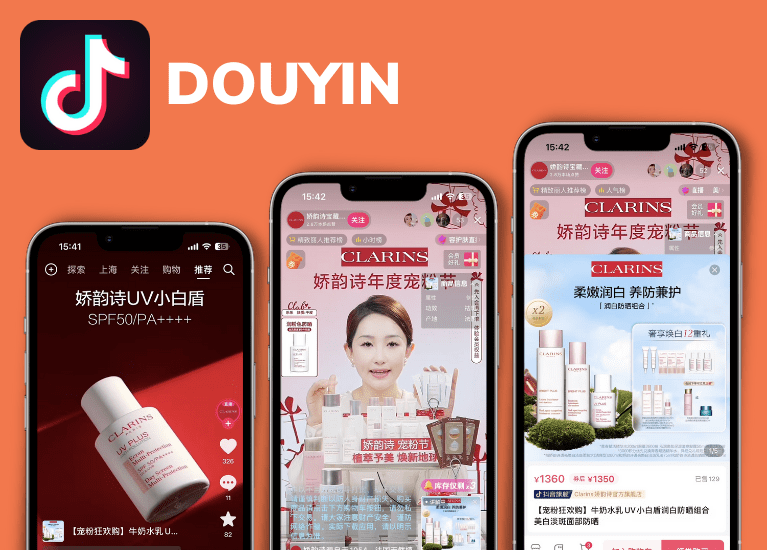
Douyin, internationally known as TikTok, fueled the popularity of short videos in China. Although it was first launched in September 2016 by ByteDance, this popular Chinese social media platform only gained significant global traction in 2020, with 2 billion mobile downloads.
At first, the feature that sets Douyin apart from other Chinese social media apps is its capability to let users create and share short videos set to music.
However, the app has since expanded to include live streaming options and e-commerce platform tools, allowing businesses to increase local visibility and drive sales conversions.
- In-app Stores: You can open an official store inside Douyin and manage catalog, orders, and fulfillment in Doudian. Payments are native through Douyin Pay, which keeps users in the app at purchase.
- Live Shopping: Hosts pin products during streams, and viewers buy without leaving the live room. It shortens the journey from interest to order.
- Native Search: Users actively search for brands, products, and how-tos, and you can bid on those moments with Search Ads. Optimize content and product titles to surface in results.
- Mini Programs and Mini-Games: Brands can build mini apps for shopping, services, membership, or utilities that run inside Douyin. Distribution taps feed both live and feed traffic, so users don’t need a separate download.
- Community-led: Due to its content-creation culture, Douyin is home to a diverse network of KOLs and KOCs who specialize in different industries and niches. Thanks to this, the
Primary users of Douyin in China (Demographics and Statistics)
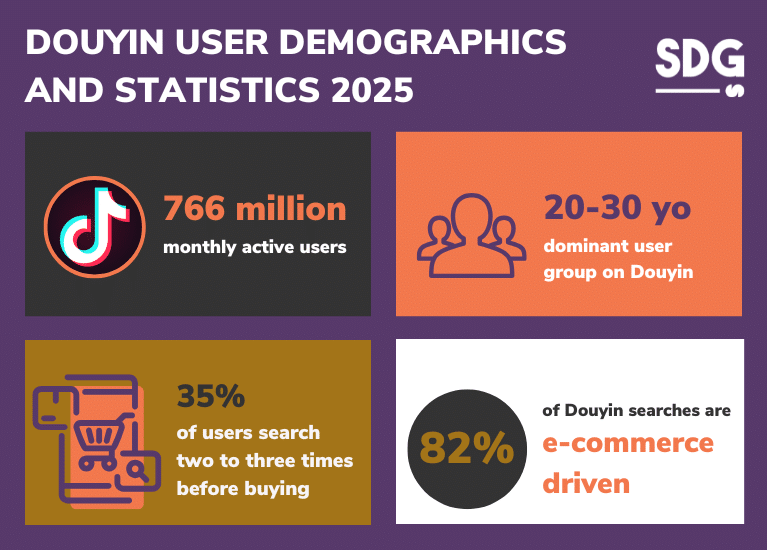
Douyin’s core audience still skews young, but usage now extends across lifestyle, local services, product search, livestreaming, and e-commerce. In the 2025 Douyin Search Business report, users aged 20 to 30 were dominant in the app’s search audience, while new users from first-tier cities had a TGI (Target Group Index) of 119, indicating a higher-than-average concentration.
Search behavior is also becoming more commercial. The same report found that about 35% of users search two to three times before buying. Broad searches, such as category and scenario terms, account for 82% of e-commerce-intent searches, while brand and product-specific searches account for 18% but convert at four times the rate of broad searches.
This makes Douyin valuable for brands launching social media campaigns in China and targeting younger, urban, high-intent consumers who move from entertainment to discovery, comparison, and purchase within the same platform.
What makes Douyin different from other social networking apps in China?
Douyin’s uniqueness lies not only in short-form videos but also in how deeply it has embedded commerce, local services, and AI-driven engagement into users’ daily online browsing. These are distinct offerings of this top Chinese social media platform.
- Built-In Local Services: Douyin is increasingly used to book restaurants, order coffee, and buy event tickets. This local service integration mirrors Meituan and Dianping but within a video-first interface.
- Native Search and Product Discovery: This popular social networking site is now a discovery engine. Users search for food, makeup reviews, or travel tips, a trend that rivals traditional search engines for lifestyle-related queries.
- AI-Powered Content Personalization: The platform’s recommendation system is highly sophisticated. Instead of focusing on who a user follows, it curates content based on behaviors.
How to Use Douyin for Social Media Marketing in China
With its massive user base and highly engaging content format, it offers brands an opportunity to connect with audiences in ways that feel both authentic and entertaining. To succeed, businesses need to approach it with strategies that go beyond simply posting videos.
- Tap into popular Chinese social media trends. Participating in hashtag challenges is one of the most effective ways to gain exposure. When brands create or join trending challenges, they align themselves with active user behavior.
- Collaborations with Key Opinion Leaders (KOLs) or micro-influencers can amplify reach. Since Chinese users trust recommendations from familiar faces, partnering with the right creator helps your brand feel more relatable and credible.
- Use Douyin’s commerce tools: Douyin integrates shopping features directly within videos and live streams. Brands can link products that viewers can buy without leaving the app, making the purchase journey seamless.
4. Kuaishou

True to its literal translation, “Fast Hands,” Kuaishou built its reputation on quick, authentic content that feels closer to everyday life than polished entertainment.
Unlike Douyin, where content often leans toward highly edited, trend-driven content, Kuaishou is known for its rawer, more community-led style. Livestreaming, vlogs, local commerce, and creator-audience interaction are central to the platform, making it especially valuable for brands that want to build trust through relatable content and real-time engagement.
Primary Users of Kuaishou in China (Demographics and Statistics)
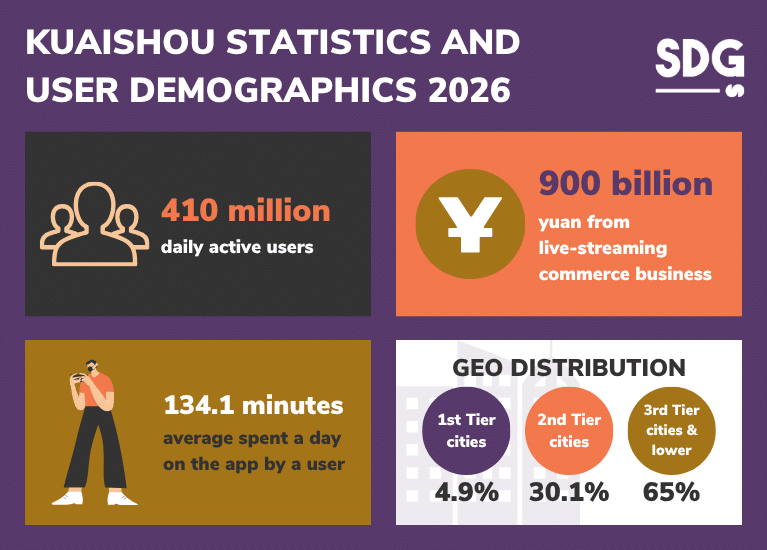
Kuaishou remains one of China’s strongest short-video and livestream platforms, especially for brands targeting users beyond top-tier cities. In 2025, the platform reported an average daily active user count of 410 million.
User engagement is also high. In Q3 2025, average daily time spent per daily active user reached 134.1 minutes, showing that Kuaishou is not just a browsing platform but a high-frequency content and commerce environment.
Its core audience is still closely tied to lower-tier cities, practical content, livestreaming, local services, and trust-based e-commerce. Kuaishou’s Q1 2025 local services GMV growth was driven heavily by lower-tier cities, which contributed over 65% of that increase.
For marketers, this makes Kuaishou useful for localized storytelling, creator-led product demonstrations, livestream commerce, and campaigns aimed at value-conscious consumers outside China’s most saturated urban markets.
What makes Kuaishou different from other Chinese social media platforms?
Kuaishou has built its own identity by focusing on authenticity, community-driven content, and user inclusivity. While Douyin dominates the polished, aspirational side of short video culture, Kuaishou has carved out a niche as the platform where “real life” content thrives.
- Longer-form Content: While short videos remain popular, Kuaishou also supports longer uploads, including vlogs. It allows creators to tell more detailed stories, which resonates with users who prefer depth over bite-sized clips.
- Rural and Lower-tier City Consumers: The app’s growth has been fuelled by grassroots engagement, strong ties to lower-tier Chinese cities, and an emphasis on genuine user engagement rather than curated perfection.
- Community-First: Unlike platforms that push influencer-heavy feeds, Kuaishou leans on everyday creators. Its algorithm promotes diverse voices, giving ordinary users visibility and fostering a loyal, interactive community.
How to use Kuaishou for your Chinese Social Media Strategy
With its strong base in lower-tier Chinese cities and a reputation for authentic, community-driven content, Kuaishou offers brands a different angle for connecting with consumers.
Here’s how you can make Kuaishou part of your social media marketing approach in China:
- Kuaishou users prefer content that feels real and relatable. Avoid over-produced videos. Show your product in everyday use or highlight customer stories to build trust.
- Live commerce is one of Kuaishou’s biggest strengths. Brands can directly engage audiences, answer questions, and convert views into sales in real time.
- Influencers on Kuaishou, often called “anchors,” have loyal, niche communities. Partnering with them can help brands reach target audiences who value personal recommendations.
- Prioritize consistency over virality. Unlike Douyin, where algorithms push for explosive reach, Kuaishou rewards steady posting and strong community engagement.
Successful Brand Campaigns on Kuaishou
In the past, Chevrolet tapped into Kuaishou’s roster of influencers to launch their “Little White” campaign. The event includes posting short videos with the famous character “Little White” while showcasing the vehicle’s components. It generated interest and buzz among younger Kuaishou users.
5. Sina Weibo

Most users describe Sina Weibo as China’s version of Twitter because of its fast-paced microblogging format, where people share text posts, images, videos, and links and participate in trending discussions.
However, Weibo is more than a simple microblogging app. Its public feeds, comments, reposts, hashtags, hot searches, and multimedia content make it closer to a real-time social news and entertainment hub. This is why it remains one of China’s most important platforms for brand visibility, celebrity marketing, public discussion, and trend monitoring.
Primary Users of Weibo in China (Demographics and Statistics)
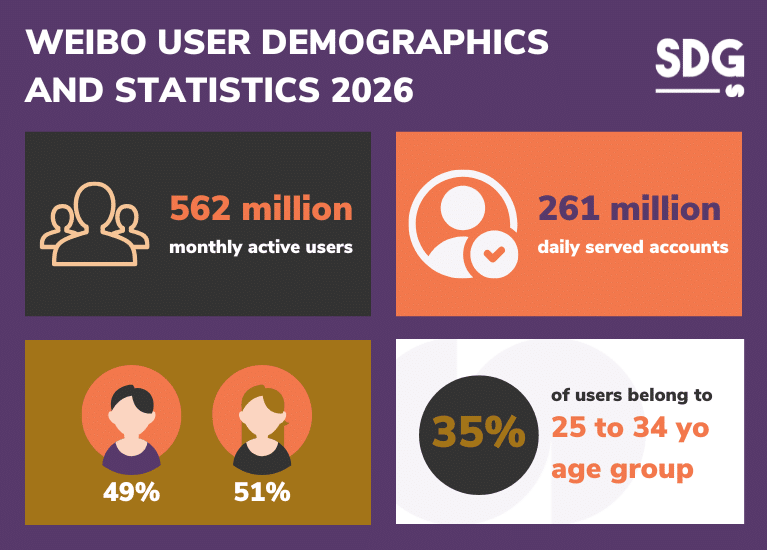
Weibo remains one of China’s most important platforms for real-time public conversation, trending topics, celebrity updates, entertainment news, and brand visibility. As of March 2026, it reported 562 million monthly active users, indicating that the app still retains a large, active audience despite intensifying competition from Douyin, Xiaohongshu, and Kuaishou.
Its audience is still heavily urban and youth-led. Recent demographic estimates show that Weibo’s largest user group is aged 25 to 34, followed by users under 24, making the platform especially relevant for brands targeting young professionals, students, entertainment fans, and trend-sensitive consumers. Gender distribution remains fairly balanced, with women slightly ahead at around 51% and men at 49%.
For marketers, Weibo is less about private communication and more about building brand and content visibility. Its strongest features within our marketing strategies at Sekkei Digital Group are trend monitoring, campaign amplification, celebrity and KOL partnerships, entertainment-driven launches, and rapid public engagement around cultural moments.
What makes Weibo different from other social media platforms in China?
In reality, Weibo has developed into a hybrid platform that blends news, entertainment, influencer culture, and e-commerce in a way that sets it apart from both Chinese competitors like WeChat and Douyin and global counterparts.
- Open Network Structure: Weibo functions as a largely public platform. It’s closer to a broadcast network, where trending topics can quickly gain local visibility.
- Strong Celebrity and Influencer Ecosystem: From actors to livestreaming personalities, influencers use Weibo as their primary channel to interact with fans, boosting brand collaborations and marketing campaigns.
- Trend-Driven Engagement: Weibo still heavily relies on hot topics to guide conversations, giving marketers opportunities to tap into cultural moments.
How to use Weibo for your social media marketing strategy in China
Weibo thrives on real-time discussions and public engagements that drive brand awareness and relevancy. Here are practical ways to use it effectively in your marketing efforts:
-
- Weibo’s trending hashtags can put your brand in the middle of local conversations. Joining these discussions with relevant, timely posts boosts visibility and aligns your brand with what Chinese users are already talking about.
- Leverage multimedia content. Use videos, GIFs, polls, and images to encourage sharing and interaction. Weibo users expect engaging formats, and visual content tends to perform better in terms of reach.
- Run paid promotions. Weibo offers a variety of advertising options, from banner ads to promoted posts.
- Seasonal events, contests, and giveaways do well on Weibo. Campaigns that invite users to participate (e.g., sharing content with a hashtag or joining a live stream), encourage user-generated content, and amplify reach.
6. Meituan-Dianping

At first glance, Meituan-Dianping may seem similar to typical delivery and e-commerce platforms. However, it offers comprehensive recommendations for local services near the user, like hotel and travel bookings, movie ticket purchases, and other business establishments.
Famously dubbed “China’s Yelp,” this platform is integral to the country’s urban daily life, helping people find convenient and reliable services.
Primary Users of Meituan Dianping in China (Demographics and Statistics)
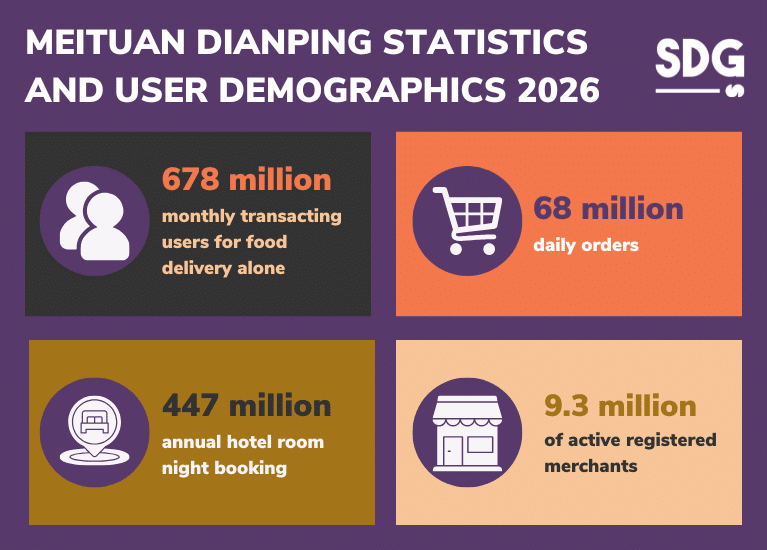
In 2025, Meituan-Dianping’s daily orders reached around 68 million on-demand orders from 9.3 million active merchants.
Most of the app’s users are highly urban-focused, but its convenience appeals to a wide range of age groups. The platform’s food delivery transactions alone garnered 678 million transacting users.
What makes Meituan Dianping different from other Chinese apps?
While many Chinese apps focus on a niche, Meituan Dianping merges online convenience with offline needs. Here are some of its defining features:
- Strong Offline-to-Online (O2O) Integration: Meituan connects directly with offline businesses. Its core strength lies in bridging the gap between online users and physical merchants, from small restaurants to large hotels.
- Group-Buying: The app’s roots in group buying (similar to Groupon’s early days) still influence its model. Users benefit from discounts and promotions, making it highly attractive to cost-conscious consumers.
- Merchant Network: Meituan serves hundreds of millions of users while partnering with millions of merchants. This scale gives it a competitive edge, creating a marketplace where both sides rely on its ecosystem for daily transactions.
How to use Meituan Dianping for digital marketing in China
Meituan Dianping drives immediate action. For businesses, this means the app is not just about visibility but about converting intent into real purchases.
Here’s how you can make the most out of it for marketing:
- Optimize your business listings. Make sure that your photos, descriptions, and service details are clear and appealing. Chinese users rely heavily on visuals and reviews when deciding where to go.
- Engage with reviews, both positive and negative. Responding quickly builds trust, and many consumers see business replies as a sign of reliability.
- Invest in search ads. Paid placements inside the app help your restaurant, hotel, or service appear higher in searches.
7. Bilibili

Bilibili is one of China’s key video-sharing and livestreaming platforms, best known for its strong roots in the ACG (animation, comics, and games) culture. Its users are highly engaged, community-driven, and often drawn to longer-form content, creator commentary, livestreams, reviews, and fandom discussions.
For game marketing in China, Bilibili is especially valuable because it connects brands with players who actively seek gaming content rather than casual entertainment. Game trailers, walkthroughs, developer updates, influencer reviews, livestream campaigns, and community-led discussions can all help build awareness, credibility, and early interest before and after launch.
Primary Users of Bilibili (Demographics and Statistics)
Bilibili’s audience is still younger than that of many mainstream Chinese social media platforms, but its user base is no longer limited to anime, comics, and gaming fans. The platform now attracts China’s Gen Z and young professional communities across gaming, animation, film, technology, lifestyle, education, music, and creator-led video content.
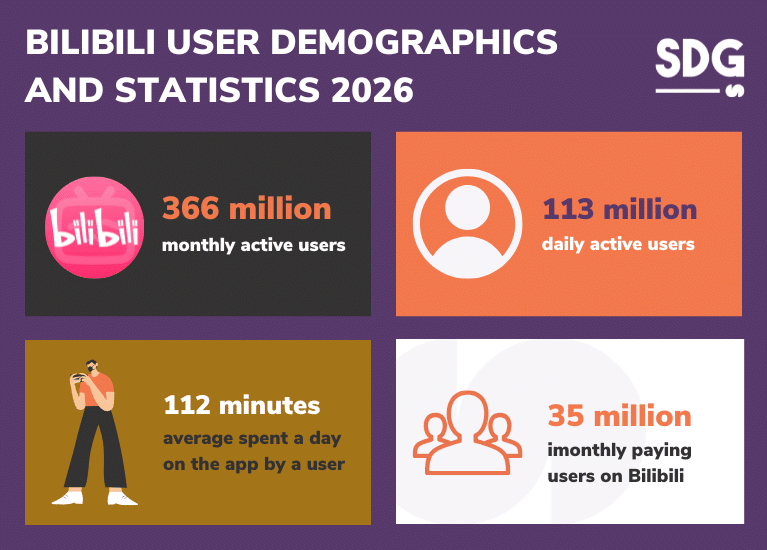
Bilibili’s latest official 2026 financial release shows that monthly active users reached 366 million in Q4 2025, up 8% year over year. Daily active users also reached 113 million, up 10% year over year, showing that the platform remains a high-frequency community rather than a passive video site.
Engagement is one of Bilibili’s strongest signals. In Q3 2025, Bilibili reported 35 million monthly paying users and a record average daily time spent of 112 minutes. This makes the platform especially valuable for brands targeting younger users who prefer long-form video, creator communities, niche interest circles, and deeper content discussions.
What makes Bilibili different from other popular social media platforms in China?
While it began as a niche site for anime, comics, and gaming (ACG) fans, it has since grown into a mainstream platform that blends video sharing, live streaming, and an interactive community culture. What makes Bilibili different is how it preserves its subcultural roots while scaling into a platform with strong social networking influence.
- Gaming-first audience: Bilibili’s ACG roots make it a natural platform for game marketing campaigns in China, like trailers, livestreams, reviews, walkthroughs, creator campaigns, and pre-launch community building.
- Educational and knowledge-driven content: University lectures, science explainers, and skill-based tutorials thrive here, appealing to China’s Gen Z, who mix entertainment with self-improvement.
- Community-driven: The site has stricter content moderation compared to other platforms, often relying on user volunteers (the “discipline committee”) to maintain quality.
- Strong subcultural identity: Bilibili’s community is rooted in ACG fandom. It has a loyal base of younger, highly engaged users who treat the platform almost like a cultural home rather than just a tool for entertainment.
How to Use Bilibili for Digital Marketing in China
Bilibili may have started as a niche community for animation and gaming fans, but today it has evolved into one of China’s most influential platforms for youth culture. Here’s how to use it effectively:
-
- Collaborate with Bilibili creators (UP主). They have strong bonds with their followers, and endorsements feel more like peer recommendations than standard advertising.
- Tap into subculture communities. Whether it’s anime, e-sports, or tech, entering these circles respectfully can earn long-term loyalty.
- Host brand challenges or events. Bilibili has been successful with branded festivals, music events, and even e-commerce tie-ins that extend beyond the platform.
8. Zhihu

If there’s an easier way to describe this Chinese social media platform, it’s how most people call it, the Quora of China. Zhihu is a go-to site for students or individuals seeking to ask questions, reply to queries, and find answers.
Its community comprises highly knowledgeable individuals, so the platform prioritizes well-researched content, from featured articles to essays.
Primary Users of Zhihu (Demographics and Statistics)
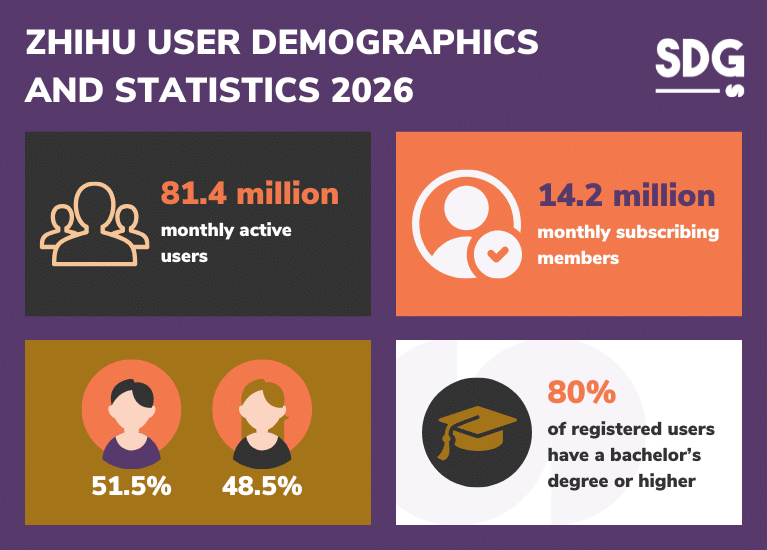
Zhihu attracts one of China’s most educated digital audiences, making it a valuable platform for brands targeting professionals, decision-makers, academics, and knowledge-driven consumers. The platform hosts a community of creators and users with strong interests in technology, finance, business, science, education, healthcare, and consumer products.
As of 2025, Zhihu reported approximately 81.4 million average monthly active users (MAUs) and 14.2 million paid subscribers, underscoring its audience’s willingness to pay for high-quality content, expert insights, and professional learning resources. Unlike entertainment-focused platforms, Zhihu users actively seek detailed answers, product research, industry analysis, and peer recommendations before making decisions.
The platform also has a strong concentration of users in China’s higher-tier cities, where purchasing power and digital engagement tend to be higher. For brands entering China, Zhihu is particularly effective for thought leadership, B2B marketing, reputation-building, and educating consumers during longer consideration cycles.
What makes Zhihu different from other Chinese social media sites?
Zhihu stands out from other social media platforms in China because it’s built around knowledge-sharing. It attracts users who value depth, credibility, and thoughtful discussion. Here’s what makes it different:
- Knowledge-focused community: Users join to ask questions, share insights, and exchange expertise rather than chase short-term hype.
- Long-form content: Answers and articles are detailed, making Zhihu closer to a blend of Quora and LinkedIn than Douyin or Weibo.
- Higher user trust: Content is perceived as more reliable due to professional, topic-driven contributions.
- SEO visibility: Zhihu content often ranks well on Baidu, giving brands extended reach beyond the platform itself.
How to Use Zhihu for Digital Marketing in China
Brands that succeed on Zhihu are the ones that position themselves as trusted voices in their industries. That’s why we listed these strategies to help you with your campaigns on this platform:
-
- Participate in relevant questions and provide detailed, valuable insights. This builds trust and positions your brand as a credible resource.
- Publish branded articles. Long-form content, such as industry analyses, guides, and case studies, resonates well with Zhihu’s professional audience.
- Engage in topic communities. Join discussions in specialized fields. Being active in niche spaces increases visibility among the right users.
9. Tencent QQ

Although Tencent QQ started as an instant messaging app in 1999, it has developed into a diverse platform that caters to a wide range of user needs.
If you check today’s version of this platform, you’ll notice it offers a range of interactive features, including voice and video calls, online gaming, social networking, and more. Users can also access other services built directly into the platform, such as news updates, weather forecasts, online purchases, and music streaming.
Primary Users of Tencent QQ (Demographics and Statistics)
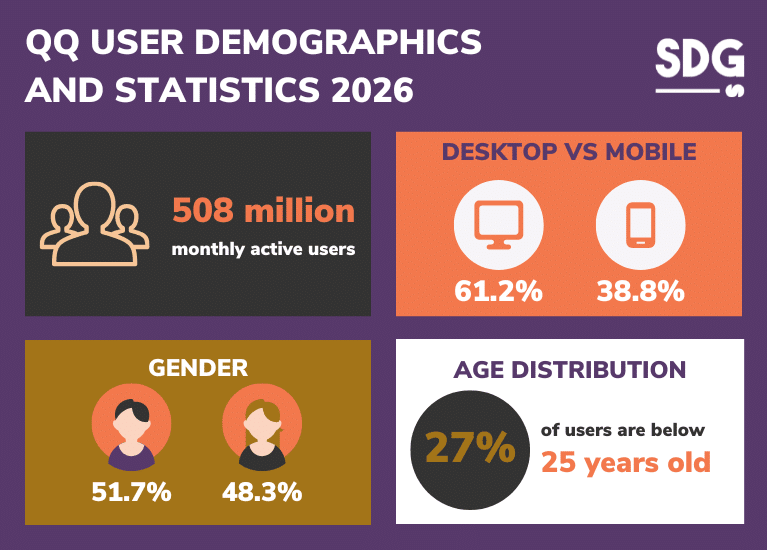
Tencent QQ is no longer China’s dominant social media platform, but it still has a large, active user base. Tencent’s 2025 annual report, published in 2026, recorded 508 million monthly active users for the application.
QQ’s core audience skews younger than WeChat’s. It remains especially relevant among students, young professionals, fandom communities, gamers, and users who prefer group-based communication. Its appeal comes from features that support peer interaction, including group chats, file sharing, QQ Zone updates, voice and video calls, avatar customization, gaming, and interest-based communities.
For marketers, QQ is less of a broad public-facing brand channel and more useful for youth-led engagement, campus-related campaigns, gaming communities, fan groups, and niche social circles.
What makes Tencent QQ different from other Chinese social platforms?
Tencent QQ remains distinct in China’s social media landscape by blending nostalgia with utility. While many newer platforms chase short-form content, QQ has kept its role as a versatile tool for communication, entertainment, and digital identity.
- Strong Desktop Ecosystem: QQ is still widely used on PCs, especially among students and office workers.
- Gaming Integration: The app is deeply tied to Tencent’s gaming empire, offering chat, communities, and in-game connectivity.
- Personalized Avatars and Spaces: Features like QQ Show and Qzone offer users more room for self-expression than the uniform feel of other apps.
How to use Tencent QQ for your Social Media Marketing Strategy in China
Tencent QQ QQ thrives on entertainment, gaming, and personal expression. For brands, that means campaigns here should be creative, fun, and community-driven. These are some strategies worth looking into:
- Build branded groups and communities: QQ groups remain popular for interest-based discussions. Creating or joining these spaces helps brands connect directly with engaged audiences.
- Use Qzone for content sharing. It’s a social feed where users share updates. Posting multimedia content here can keep your brand part of the daily digital routine.
- Tap into QQ’s gaming ecosystem. Since it’s tightly linked with Tencent’s gaming platforms, in-game collaborations and community events can strengthen brand visibility.
10. Toutiao

Toutiao is an AI-powered news and content discovery platform that delivers highly personalized feeds based on each user’s reading behavior, interests, search activity, and engagement patterns.
Beyond news, the app features a wide mix of articles, short videos, opinion pieces, and user-generated content across entertainment, finance, lifestyle, technology, and current trends. This makes Toutiao useful for brands that want to reach users through targeted, interest-based content rather than broad social posting.
Primary Users of Toutiao (Demographics and Statistics)
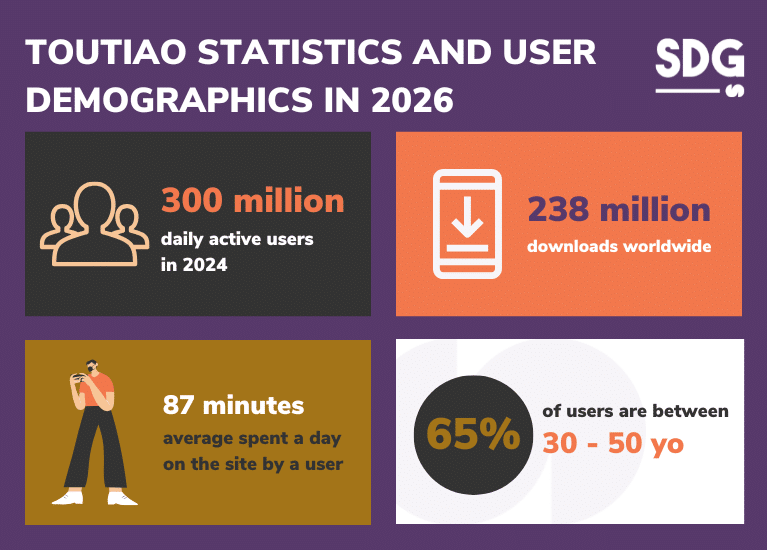
Toutiao’s audience is broader and older than China’s short-video-first platforms. The latest public platform marketing data show that users aged 30 to 50 account for more than 65% of the app’s audience, while nearly half fall into mid- to high-consumption groups. Urban users account for close to 70%, making the platform more relevant to brands targeting established professionals, household decision-makers, and higher-intent readers.
Unlike Douyin or Xiaohongshu, Toutiao is not mainly driven by youth trends or lifestyle discovery. Its users typically visit the platform for news, public affairs, finance, automotive content, local updates, entertainment, and interest-based recommendations. This makes it more useful for long-form content, authority-building, native ads, and campaigns that need stronger trust signals.
How to Use Toutiao for Digital Marketing in China
Toutiao distributes content based on relevance and engagement. For marketers, this means even new brands can achieve substantial reach if their content resonates with user interests. To do that, here are some tips:
- Publish informative articles with depth and clarity. Content that educates or explains industry trends performs better than superficial promotions.
- Optimize content for the algorithm. Toutiao rewards content that keeps readers engaged. Use compelling headlines, strong visuals, and straightforward storytelling to increase dwell time.
- Build authority through thought leadership. Sharing expert insights, case studies, or commentary helps position your brand as a trusted voice in your field.
Successful Brand Campaigns on Toutiao
When Coca-Cola’s “Share a Coke” campaign reached Toutiao, it encouraged users to buy and share their personalized Coke bottles within the platform. The brand uses the app’s native advertising tools to drive engagement and social sharing.
11. Taobao

Primary Users of Taobao (Demographics and Statistics)
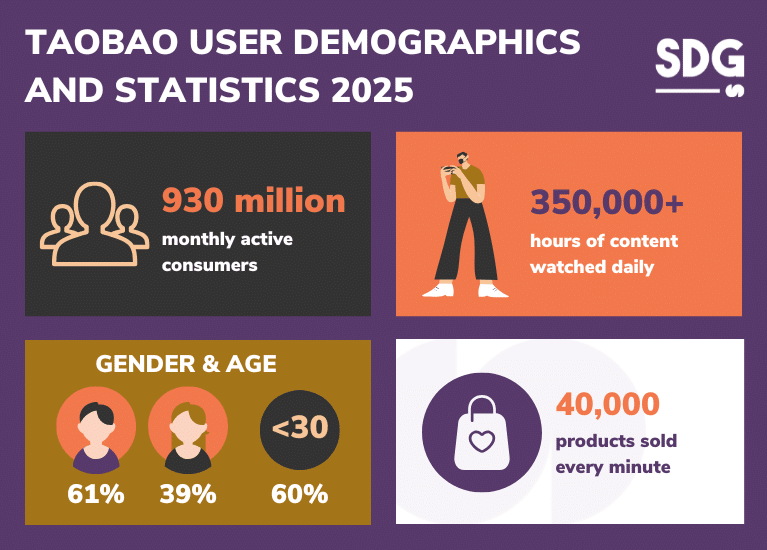
Taobao is no longer just a general online marketplace. It now functions as a shopping, content discovery, livestream commerce, and brand engagement platform within Alibaba’s wider Taobao and Tmall ecosystem.
The platform’s audience is broad, but recent data shows clear strength among younger shoppers. Alibaba reported that Taobao and Tmall reached 1 billion annual active consumers in 2025. It had 155 million monthly active users from the post-2000 generation in October 2025.
These users are drawn to personalized product feeds, long-tail merchants, IP collaborations, anime and gaming-related products, food content, and lifestyle-led shopping.
Taobao also retains strong high-value and repeat users. In 2025, Tmall reported that Taobao users visited the app about once every two days, while 88VIP members visited 27 days out of every 30.
What makes Taobao different from other Chinese apps?
Taobao built its reputation as the marketplace where anyone could sell almost anything, from everyday goods to niche collectibles. This mix of accessibility, community-driven trust, and innovation is what sets it apart.
Other than that, these features differentiate it from others:
- Alibaba Integration: As part of the Alibaba Group, Taobao benefits from Alipay’s seamless payment system, Alibaba Cloud’s infrastructure, and cross-platform traffic from Tmall and other Alibaba apps.
- Personalized Shopping Journeys: Instead of just showing top sellers, the feed feels like a customized discovery channel, blending entertainment with product discovery.
- Consumer-to-Consumer Roots: Taobao grew from a C2C model. It opened doors for small businesses and individuals to enter the online market without heavy costs.
How to Use Taobao for Digital Marketing Strategy in China
Taobao is a digital marketing channel through which brands can reach shoppers via discovery-driven experiences. These are unique ways marketers can utilize the app to connect with Chinese consumers:
- Maximize the use of Brand Storefronts: Create a visually appealing Taobao store with clear branding, product photos, and engaging descriptions. First impressions matter.
- Run timed promotions. Use vouchers, discounts, and seasonal campaigns to capture attention during major shopping festivals like 11.11.
- Leverage live streaming features. Partner with influencers or host live sessions to showcase products in real time. This drives engagement and builds trust quickly.
12. JD.com

JD.com is one of China’s largest e-commerce platforms, known for its strong presence in electronics, home appliances, consumer goods, and premium retail products.
What sets JD.com apart is its extensive self-operated logistics network, which gives the platform greater control over warehousing, fulfillment, and delivery. Combined with its focus on product authenticity, customer service, and fast shipping, JD.com has built a reputation as a trusted marketplace for consumers purchasing higher-value items online.
Primary Users of JD.com (Demographics and Statistics)
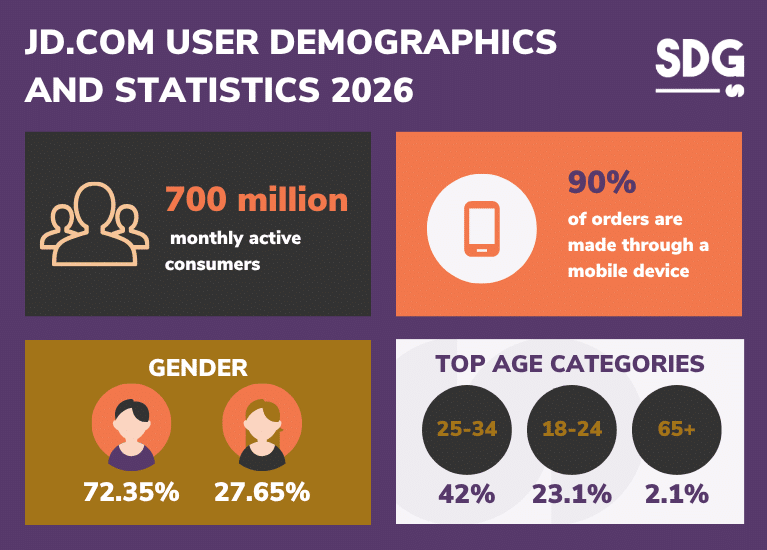
JD.com reported that its annual active customers surpassed 700 million in October 2025, supported by stronger shopping frequency across JD Retail and newer services.
It’s especially relevant for mobile-first shoppers. The company states that more than 90% of orders are placed on mobile devices, making the app central to product search, comparison, purchase, delivery tracking, and after-sales service.
Its core audience includes consumers who prioritize authenticity, fast logistics, electronics, home appliances, daily goods, and reliable delivery. This makes the platform particularly strong among practical, quality-conscious shoppers rather than purely trend-led buyers.
During the 2025 618 shopping festival, JD said the number of users placing orders more than doubled year-on-year, with over 2.2 billion orders across online, offline, and food delivery channels.
How to Use JD.com for Digital Marketing in China
Because of its reputation for authenticity and speed, many consumers treat JD.com as a trusted source for branded goods. How can foreign brands take advantage of this? Here are some strategies to consider:
- International and domestic brands often launch verified flagship stores on JD.com. This strengthens brand credibility and gives you more control over product presentation, pricing, and customer service.
- JD offers in-app advertising options, including banner placements, search ads, and targeted recommendations. These tools allow you to reach shoppers based on their browsing and purchasing.
- Brands can emphasize this by using official verification tags and strong branding within product pages. This builds trust and helps distinguish you from grey-market sellers.
13. Tmall

Tmall is a cross-border e-commerce business-to-consumer platform with authorized distributors selling their goods in the Chinese market. While its primary focus is e-commerce, the online marketplace also integrates social media-like features into its interfaces, such as official brand pages, user-generated content, and product reviews.
Primary Users of Tmall (Demographics and Statistics)
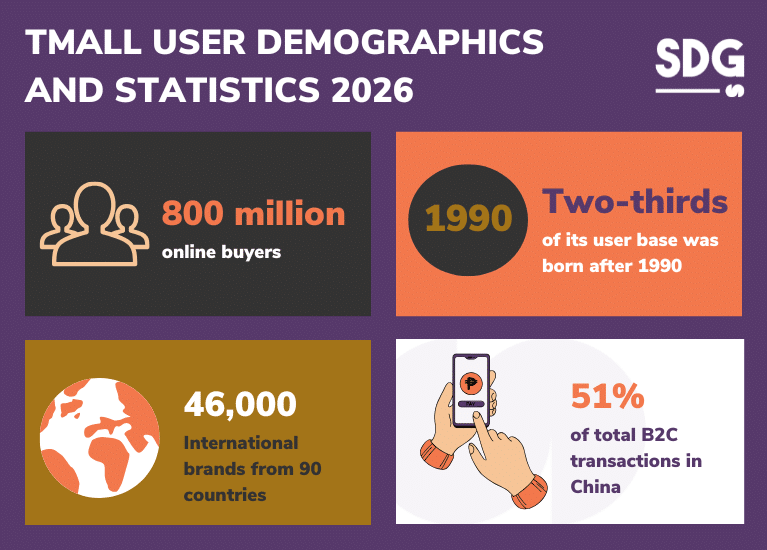
Since Tmall handles around 51% of B2C transactions in the country, it’s only natural that the platform has about 800 million active online buyers. Its dominant user base is also from Tier 1 and Tier 2 cities.
Currently, Tmall accommodates over 46,000 international brands from 90 different countries. The demand mainly comes from a younger demographic, which is unsurprising given that two-thirds of its user base was born after 1990.
What makes Tmall different from other Chinese apps?
While many platforms emphasize social commerce or bargain hunting, Tmall positions itself as a premium marketplace for authentic goods backed by well-known brands. We listed some of the unique features you can expect from Tmall:
- Brand-Centric Platform: Tmall is designed for official brand stores, giving companies complete control over presentation and reputation.
- Strong Consumer Trust: It enforces strict authenticity standards, attracting shoppers willing to pay for reliability.
- Premium Positioning: Unlike discount-focused apps, Tmall often highlights higher-end products and international labels.
How to Use Tmall for Digital Marketing in China
Promoting on Tmall is a reliable way to reach consumers who value credibility and are willing to spend more on verified products. Here are strategies worth trying to appeal to Chinese audiences:
- Set up a Flagship Store. Build an official presence that reassures customers and strengthens brand image.
- Join major shopping festivals. Participate in campaigns like Double 11 to gain massive visibility during peak demand.
- Leverage Tmall Ads. Use in-app search ads and display placements to target active buyers at the decision stage.
Successful Brand Campaigns on Tmall
Tmall launches the Singles’ Day Global Shopping Festival every year on 11.11 to help brands increase sales through exclusive discounts, promotions, and limited-edition products.
14. Pinduoduo

Pinduoduo rose to prominence by combining e-commerce with social networking, transforming online shopping into a shared and highly engaging experience.
The platform is best known for its group-buying model, in which users can secure lower prices by inviting friends and family to purchase together. Beyond discounts, Pinduoduo incorporates gamified features, user reviews, recommendations, and social sharing to drive engagement and product discovery. This blend of social commerce and value-focused shopping has made it particularly popular among price-conscious consumers across China.
Primary Users of Pinduoduo (Demographics and Statistics)
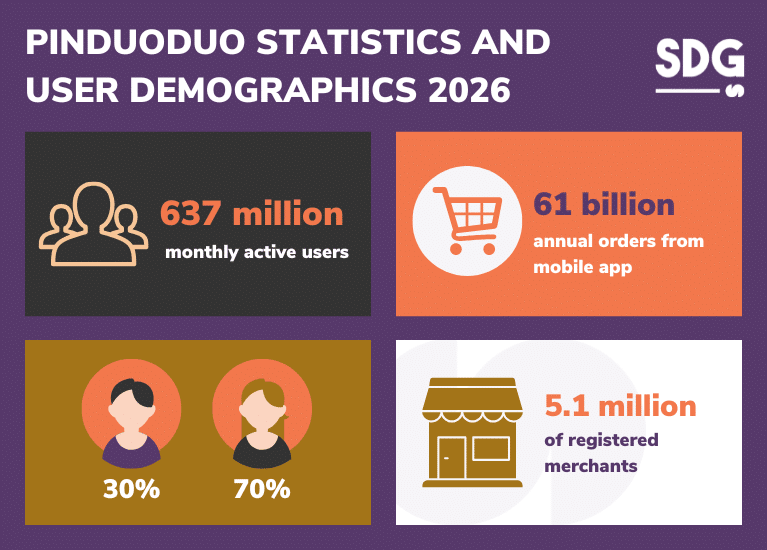
Pinduoduo has evolved from a discount marketplace focused on lower-tier cities into one of China’s largest social commerce platforms. The platform is particularly popular among value-conscious consumers who prioritize affordability, promotions, and group-buying opportunities. Its user base remains strong in Tier 3, Tier 4, and rural markets, where price sensitivity is generally higher than in major metropolitan areas.
How to Use Pinduoduo for Digital Marketing Strategy in China
Pinduoduo’s marketing ecosystem is built on group-buying, viral engagement, and social sharing. For brands, the challenge is learning how to use this mix of social commerce and price-driven shopping without diluting their image.
Here’s how businesses can integrate Pinduoduo into their digital marketing strategy:
- Run limited-time promotions. Short windows for discounts fit the platform’s deal-driven culture and push faster conversions.
- Tap into social sharing. Campaigns work best when they’re easy to share within chat groups.
- Tailor products for value-conscious buyers. Success in the platform depends on price appeal. Smaller packs, bundles, or entry-level pricing options often perform well.
- Experiment with lower-tier city reach. Pinduoduo is especially popular outside of major metropolitan hubs, giving marketers access to consumers often overlooked on other platforms.
15. Yizhibo

Yizhibo is a popular live-streaming platform in China. Influencers, celebrities, and brands frequently use it to connect with audiences through real-time video content.
The app provides a range of features vital for live-stream marketing, including chat engagement, which enables direct interaction with viewers, virtual gifting options, which enhance user participation, and built-in monetization tools.
These features make it an effective platform for brands looking to increase engagement, promote products, and drive sales through influencer partnerships and interactive live-stream campaigns.
Primary Users of Yizhibo (Demographics and Statistics)
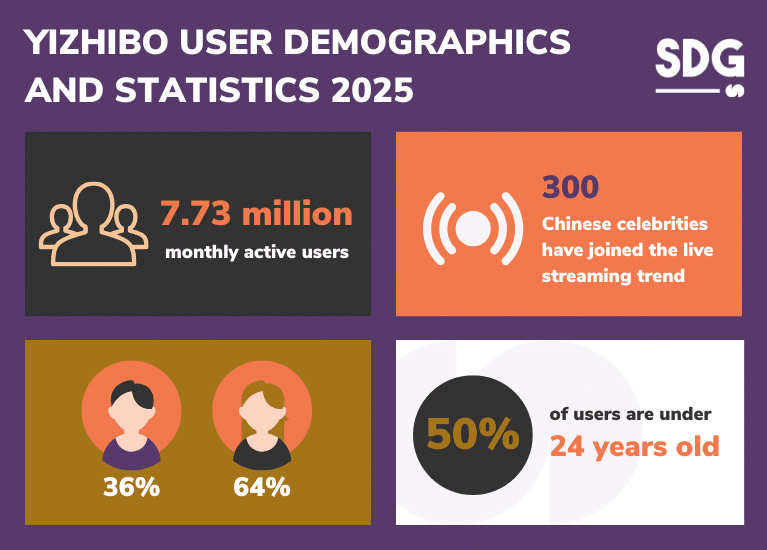
Yizhibo’s live-streaming services led the platform to attract a large user base of influencers, celebrities, and content creators. These users have massive fan bases that add to the app’s monthly active users of 7.73 million. It’s worth noting that over 50% of these accounts are under 24 years old.
How to Use Yizhibo for Digital Marketing Strategy in China
Yizhibo quickly gained traction thanks to its integration with Weibo. For digital marketers, it offers direct access to audiences through interactive, real-time content. Here’s how to use the app effectively in your strategy:
- Live product launches: Dynamically introduce new items while interacting with viewers’ questions.
- Influencer collaborations: Partner with KOLs on Weibo to draw large audiences to Yizhibo streams.
- Real-time promotions: Offer flash deals or coupons during broadcasts to encourage instant conversions.
- Social sharing with Weibo: Cross-post streams to maximize visibility and drive higher traffic.
Other Notable Chinese Social Media Apps You Should Know
- Vipshop: It may appear to be an e-commerce platform, but it has recently expanded to include social media features.
- Mafengwo: A social platform enhancing travel experiences and planning trips.
- Kugou Music: While its primary focus is music streaming, it has social features such as user-generated playlists, music sharing, and comments.
- DEWU: An online marketplace popular with Chinese Millennials and Gen-Z consumers.
- Douban: This is a suitable digital space for intellectual discourse and cultural discussions.
- Miaopai: The app was previously called “China’s Vine,” mainly focused on video content creation and sharing

Frequently Asked Questions (FAQs)
Can foreign brands use Chinese social media platforms without a local team?
Foreign brands can use Chinese social media platforms, but a local team or agency is usually helpful for account setup, content localization, compliance, advertising, influencer coordination, and platform-specific execution. China’s social media ecosystem differs from Western platforms in user behavior, content formats, regulations, and payment systems. Direct translation is rarely enough. Brands need a localized strategy, Chinese copywriting, and market-specific campaign planning.
What is the difference between Chinese social media and Western social media?
Chinese social media platforms are more integrated with commerce, payments, customer service, livestreaming, search, and offline services. Western platforms often separate discovery, content, messaging, and purchase journeys across different apps. In China, users can discover products, read reviews, watch livestreams, speak with brands, and complete payments on a single platform. This makes social media marketing in China more directly tied to conversion.
How should brands choose the right Chinese social media platform?
Brands should choose a Chinese social media platform based on audience behavior, product category, campaign goals, content formats, and conversion paths. For example, WeChat supports private traffic, Douyin supports video-led discovery, Xiaohongshu supports review-based search, Bilibili supports youth and gaming communities, and Tmall or JD.com support verified e-commerce sales.
What role do KOLs and KOCs play in Chinese social media marketing?
KOLs and KOCs play an important role in Chinese social media marketing because users often rely on creators’ recommendations, peer reviews, and community discussions before making a purchase. KOLs help brands scale visibility, while KOCs often provide more relatable, experience-based content. The right mix depends on whether the campaign goal is awareness, trust, or conversion.
Do foreign brands need different content for each Chinese social media platform?
Yes. Each Chinese social media platform has its own user behavior, content format, and commercial function. WeChat content should support trust and retention. Xiaohongshu posts should feel useful and review-led. Douyin videos need quick hooks and strong visuals. Bilibili content can be longer and community-focused. Zhihu requires depth and expertise. Reposting the same content across all platforms usually weakens performance.
Is WeChat the most popular social media app in China?
Yes. WeChat remains the most widely used social media platform in China, with more than 1.4 billion monthly active users. However, describing it as only a social media app understates its role. The app combines messaging, social networking, mobile payments, e-commerce, customer service, content publishing, Mini Programs, and digital services. Its deep integration into daily life makes it one of the most important digital platforms for brands looking to build long-term relationships with Chinese consumers.
Your Trusted Social Media Marketing Partner in China!
Navigating the top Chinese social media platforms requires a deep understanding of each platform’s unique content creation interface and user preferences. At the same time, you must understand how crucial it is to adapt marketing strategies and stay up to date with evolving trends.

At Sekkei Digital Group, we specialize in solving these challenges and specialize in turning them into opportunities. Our team is equipped with the expertise and experience necessary to tailor a strategy that maximizes the potential of the local social media landscape for your brand.
We offer comprehensive services to empower your digital marketing strategies in China. So, if you need help finding the right social network for your brand, don’t hesitate to contact us.


ABOUT THE AUTHOR
Paola L.
Content Strategist at Sekkei Digital Group | 4+ Years of Digital Marketing Experience
Paola specializes in China digital marketing strategy for international brands. Her work combines local platform knowledge, audience behaviour analysis, and sector-specific insights across B2B, travel, FMCG, and gaming industries.
—
Looking to grow your brand in China?