

Last Updated on July 11, 2026
Xiaohongshu (小红书), also known locally as “Little Red Book,” is a dynamic Chinese social media platform that blends content sharing, user engagement, and integrated shopping features into a single app.
It serves over 300 million monthly active users, with an average user spending at least 40 minutes on the platform per day. As a social media marketing channel, Xiaohongshu heavily favors user-generated content (UGC) and community-centric activations.
To develop an effective Xiaohongshu marketing strategy, international brands must learn how to build organic content authority and appeal to the platform’s younger demographic.
Let our team at Sekkei Digital Group walk you through each process below, from account setup to campaign activation.

Understanding Xiaohongshu Marketing Landscape
Right now, over 140,000 brands from more than 200 countries and regions have established a presence on Xiaohongshu, leveraging the app’s features for their social media marketing campaigns.
With 60% of Chinese users on Xiaohongshu conducting high-intent searches before making any online purchases, your competitors are likely already launching strategic campaigns and building community engagement to attract your target audience.
To get ahead of them, foreign marketers must first learn the ins and outs of the platform. This includes understanding the app’s user demographics, general consumption patterns, and marketing features.
Who is the target audience of Xiaohongshu (Little Red Book)?
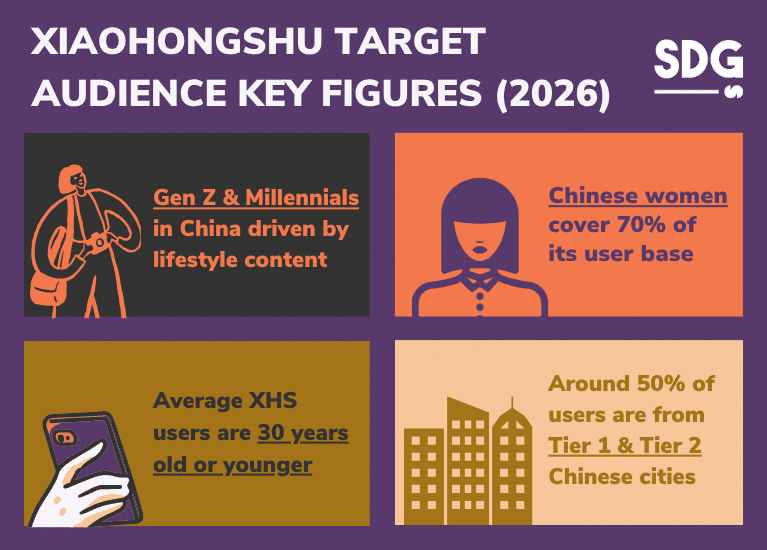
Xiahongshu is widely adopted by younger consumers in the Chinese market. For brands looking to reach specific audiences on the platform, it’s worth noting that its target audience is mostly inclusive of:
- Gen Z and Millennial population, who are heavily driven by lifestyle content
- Predominantly female user base (covering roughly 70% of the total platform users)
- Around 50% of users are from tier 1 and tier 2 Chinese cities
- The average Xiaohongshu user age group is 30 years old or younger (Post-90s and Post-00s generation)
What are the most effective content types for business marketing on Xiaohongshu?
Xiaohongshu thrives as a content creation platform, with most users expecting creators and brands to publish authentic and creative posts rather than traditional media.
These consumers come to the platform to search, compare, save, and evaluate content that feels useful, visual, and credible. Its strength lies in how it blends user-generated content (UGC), product discovery, and social commerce, making it a powerful channel for brands to educate, inspire, and build trust.
1. Educational Content
Educational content performs well on Xiaohongshu because many users treat the platform like a search engine for lifestyle decisions, product comparisons, travel planning, beauty routines, parenting tips, wellness advice, and brand research.
For businesses, this means the strongest Xiaohongshu marketing strategy often answers questions users are already asking.
Instead of simply introducing a product or service, brands should explain how it works, who it is suitable for, what problems it solves, and how users can make a better decision.

Examples include:
- Product comparison Notes
- Step-by-step tutorials or how-to guides
- Buying guides
- “Mistakes to avoid” content
- FAQ-style posts
- Before-and-after explanations
- Expert tips from the brand’s internal team
This type of content helps position the brand as a knowledgeable resource rather than just a seller. On Xiaohongshu, that distinction matters. Users are more likely to engage with brands that help them understand a topic before asking them to buy.
2. Inspirational Content
As an image-driven social media platform, most Xiaohongshu users engage with content that integrates visual storytelling. They want to know not only what a product is. They want to see how it fits into a lifestyle, routine, identity, or aspiration.
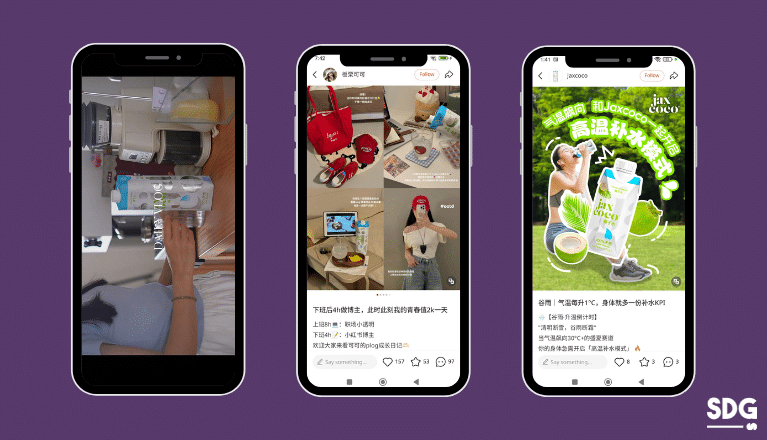
For consumer brands, this could mean showing how a skincare product fits into a morning routine, how a fashion item works across different occasions, or how a travel destination feels through local food, hotel views, and personal moments.
For B2B and service-led brands, inspirational content can focus on outcomes, transformation, team culture, customer experience, or industry leadership.
The key is to make the content feel native to Xiaohongshu. Strong visuals, clear captions, realistic scenarios, and story-led posts often work better than campaign-style brand announcements.
3. Social Proof and User-Generated Content
Trust is one of the strongest drivers of Xiaohongshu marketing campaigns. Users often rely on peer recommendations, creator reviews, product experiences, and saved Notes before making a purchase decision.
Effective social proof can include customer reviews, creator-led product testing, before-and-after content, behind-the-scenes stories, case-style posts, and real user experiences. The goal is to show evidence, not just brand claims.
Xiaohongshu users may be discovering the brand for the first time, so credible third-party content can reduce hesitation and make the brand feel more relevant to local audiences.
4. Integrated Social E-Commerce Content
As a social commerce platform, Xiaohongshu allows brands to integrate e-commerce links into content features such as Notes, short-form videos, and livestreams.
Rather than clicking on static product pages, Xiaohongshu users tend to show greater interest and engagement in content that explains and demonstrates a product’s credibility. These types of content not only drive traffic but also open opportunities for direct sales conversion.

What are the Key Marketing Features of Xiaohongshu?
A considerable part of creating high-quality content on Xiaohongshu is understanding how users interact with the app. Chinese audiences are highly sensitive to localization, content tone, and authenticity.
A brand cannot simply repost global campaign assets and expect strong results. Xiaohongshu content needs to feel native to the platform, both in format and in user value.

Notes
Notes is the content flagship feature of Xiaohongshu. It enables brands and regular users to share product experiences, recommendations, comparisons, lifestyle tips, reviews, and personal insights through images, text, and structured captions.
This feature can answer search intent, introduce product benefits, show real usage scenarios, and encourage users to save or comment for later reference.

Unlike traditional ads, strong Notes usually feel practical and community-driven. They may explain how to choose a product, compare different options, share a routine, or respond to common customer questions. This makes Notes one of the most important formats for building brand trust on Xiaohongshu.
Short Videos
Short-form video content on Xiaohongshu enables brands to deliver more immersive, detailed storytelling.
Content that performs well typically focuses on clarity and authenticity rather than high production value. Chinese users tend to respond better to content that feels relatable and experience-driven.
Compared to other Chinese platforms such as Douyin, Xiaohongshu videos are less driven by fast-paced trends and more focused on delivering practical value.
Live-streaming
Live-streaming content is among the most highly lucrative content styles on Xiaohongshu. Many established brands leverage this feature when working with Key Opinion Leaders (KOLs) and Key Opinion Consumers (KOCs).

In-App Search Engine
Xiaohongshu has played a major role in the growth of social search in China. According to the platform, 70% of its monthly active users use search, while 42% of new users send internal app queries on their first day.
With 88% of searches actively initiated by users, the platform has become an important discovery and research tool for Chinese consumers.
Unlike traditional search engines, Xiaohongshu’s search results are content-driven. Users search for keywords related to products, lifestyles, or problems, and the platform surfaces relevant Notes, videos, product listings, and user-generated content.

Proven Xiaohongshu Content Strategies for Foreign Brands in China
The strongest Xiaohongshu marketing strategies rarely rely on large-scale campaigns with a single approach. They usually combine three elements: consistent content seeding, carefully selected influencer partnerships, and keyword-led optimization to sustain visibility through in-app search.
1. Content Seeding Campaigns
Content seeding is one of the most effective ways for foreign brands to build early visibility on Xiaohongshu. It involves distributing brand-related content through creators, customers, or product users so that brand mentions appear naturally across user feeds and search results.
On Xiaohongshu, this is often called “planting grass” because the goal is to create interest before users are ready to buy. Instead of pushing direct ads, brands “seed” credible content that introduces the product, explains its application, and builds familiarity over time.

For foreign brands, this approach is especially useful because Chinese consumers may not have strong prior awareness of the brand. A content seeding campaign helps create local relevance by showing how the product fits into real routines, lifestyles, or decision-making moments.
2. Collaborations with Chinese Influencers
Influencer marketing is central to Xiaohongshu because users rely heavily on creator opinions when researching products, destinations, services, and lifestyle choices. However, the platform is not only about working with large creators.
For most foreign brands, the strongest approach is to balance KOLs and KOCs. KOLs can create reach and authority, while KOCs can build authenticity and product-level trust.
| Influencer Type | Best For | Main Advantage | Campaign Role |
| KOCs | Trust-building, product reviews, content seeding, niche communities | Authentic peer-style recommendations | Reinforcing credibility and generating searchable UGC |
| KOLs | Awareness, brand launches, destination campaigns, major product pushes | Broader reach and stronger visibility | Introducing the brand to a larger audience |
The right influencer mix depends on the campaign goal. If a brand is new to China and needs credibility, a KOC-heavy strategy can be more effective. If the brand already has a clear positioning and wants stronger visibility, KOL collaborations can help accelerate awareness.
When to work with Xiaohongshu Key Opinion Consumers (KOCs)
Key Opinion Consumers, or KOCs, are everyday creators with smaller but often highly engaged communities. Their value comes from relatability. They usually sound less commercial than large influencers, which makes their content feel closer to a personal recommendation.
Brands should work with KOCs when the goal is to build trust, collect authentic product experiences, or create a base of searchable Xiaohongshu content. This is particularly useful for beauty, wellness, food and beverage, travel, fashion, and lifestyle brands where users want to see how a product performs in real life.
Xiaohongshu KOC Marketing Case Study: Jax Coco
Building Credibility Through Xiaohongshu KOC Marketing
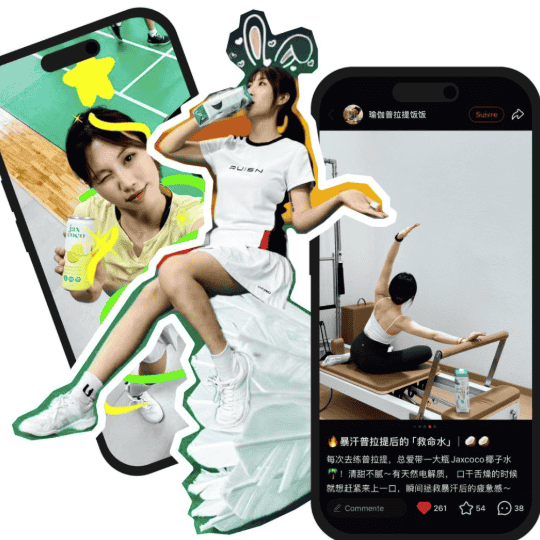
To support Jax Coco‘s entry into China, Sekkei Digital Group partnered with 20 lifestyle and wellness KOCs who naturally featured the premium coconut water in their daily routines. Rather than following a rigid script, creators communicated key product messages in their own voice, helping the brand build credibility through authentic storytelling on Xiaohongshu.
Campaign results:
- Activated 20 lifestyle and wellness KOCs.
- Generated 172,000 content views.
- Achieved more than 2,000 engagements.
When to work with Xiaohongshu Key Opinion Leaders (KOLs)
Key Opinion Leaders, or KOLs, are better suited for campaigns that require reach, authority, and stronger brand recognition. They are particularly useful for product launches, tourism campaigns, seasonal activations, major brand announcements, and categories where aspirational value matters.
However, KOL selection should not be based solely on follower count. Brands need to review content relevance, audience demographics, engagement quality, comment sentiment, visual style, and previous brand collaborations.
Xiaohongshu KOC Marketing Case Study: Region of Valencia
Building Destination Credibility Through Xiaohongshu KOL Marketing
To strengthen awareness among Chinese travelers, Sekkei Digital Group partnered with Xiaohongshu travel creators to showcase the Region of Valencia‘s coastal experiences, culture, cuisine, and seasonal attractions. The campaign used authentic creator content to help Chinese travelers evaluate the destination during the planning and consideration stages.
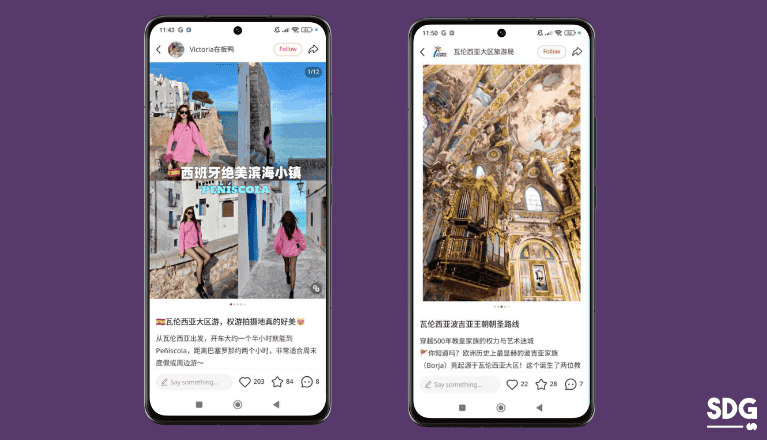
Campaign highlights:
- Partnered with relevant Xiaohongshu travel creators to introduce the Region of Valencia to Chinese audiences.
- Reinforced key destination experiences through authentic lifestyle and travel content.
- Supported destination credibility alongside broader OTA marketing initiatives.
Where to find Xiaohongshu influencers to work with
Whether you’re looking to work with top-tier influencers or niche-specific content creators, your Xiaohongshu marketing strategy must consider category fit, engagement quality, audience demographics, content style, pricing, and past campaign performance.
Two commonly used platforms for influencer discovery on Xiaohongshu are Pugongying and Qiangua.
| Platform | Type | Best For | Key Advantages |
| Pugongying | Official Xiaohongshu creator collaboration platform | Formal KOL and KOC partnerships inside Xiaohongshu’s ecosystem | Official platform, creator categories, rate visibility, safer compliance route |
| Qiangua | Third-party Xiaohongshu analytics and influencer research tool | Deeper influencer discovery, monitoring, and competitor research | Broader creator data, engagement tracking, follower analysis, and content performance insights |
3. Paid Advertising Activations
Paid advertising on Xiaohongshu is most effective when it amplifies content that already fits the platform’s user behavior. Users are highly responsive to authentic Notes, creator recommendations, and practical product discovery, so advertising should not feel disconnected from the organic content strategy.
For foreign brands, paid media can help accelerate visibility in specific categories, support product launches, promote KOL or KOC content, and capture search demand around relevant keywords.

Types of Advertising on Xiaohongshu
- In-feed ads: Best suited for product launches, campaign awareness, and content amplification. It places brand content into native discovery environments.
- Search ads: Mainly focus on category terms, product-intent searches, and competitor keywords. It captures users who are already researching.
- Brand Zone: This format gives the brand a stronger presence at the top of Xiaohongshu search results.
- KOL/KOC content boosting: This ad type extends the life and reach of credible organic content, typically product reviews and social proof.
4. Xiaohongshu Store
Opening a Xiaohongshu store allows brands to sell products directly inside the app, reducing friction between content discovery and purchase.
Instead of sending users to a separate website or marketplace, a store allows them to interact with product content, reviews, livestreams, and purchase options within a single ecosystem.

Should you open a Xiaohongshu Store for your brand?
It’s worth considering whether your brand already has traction on the platform or whether your product category is well aligned with Xiaohongshu’s discovery behavior.
Beauty, skincare, fashion, wellness, food and beverage, lifestyle, and travel-related products often perform well because users already search for recommendations and reviews in these categories.
5. Xiaohongshu SEO Practices
A considerable amount of traffic on Xiaohongshu comes from in-app searches. It means that appearing in search results can influence purchase decisions more than you think. To do this, you must localize content from titles, captions, and hashtags to visuals and other media assets.
An effective Xiaohongshu SEO strategy should include:
| SEO Area | What Brands Should Optimize |
| Note titles | Use relevant Chinese keywords, product category terms, and user-intent phrases |
| First line of caption | Place the strongest hook early because captions are previewed in-feed |
| Body copy | Answer real user questions and include natural keyword variations |
| Hashtags | Combine broad category tags with niche, scenario-based, and branded tags |
| Cover image | Use strong visual cues and readable text overlays when appropriate |
| Comments and engagement | Encourage meaningful discussion because user interaction can support visibility |
| Account profile | Include localized category signals, brand value, and searchable terms |
How To Open A Xiaohongshu Account For Your Brand (Step-by-Step)
To access Xiaohongshu’s full marketing features, international brands should register for an official business or professional account. A regular user account can publish content, but it does not offer the same level of credibility, data access, advertising options, or commercial tools that brands need to operate properly in China.

A verified Xiaohongshu account gives your brand a more legitimate local presence. It can also unlock features such as analytics, advertising access, e-commerce integrations, and brand verification indicators, depending on the account type and approval status.
Professional and enterprise account options are generally designed for creators, businesses, and brands that want to operate commercially on the platform.
Step 1: Create a Regular Xiaohongshu Account
The first step is to create a standard Xiaohongshu account using a mobile number, an email address, or an approved login method.
For overseas brands, it is important to use details that can be consistently verified later. Your phone number, business name, owner information, and supporting documents should match the legal entity you plan to register under.
Step 2: Apply for a Professional or Enterprise Account
Once the regular account is created, brands can apply for a professional account (often referred to as 专业号) or an enterprise account, depending on their business setup. This is the account type that allows brands to build an official presence rather than operating like a personal user.
Step 3: Prepare Your Business Documents
Xiaohongshu will typically require proof that your brand is a legitimate business. Required documents may include your company name, business license or registration certificate, brand logo, owner or operator details, and brand introduction.
For overseas entities, additional documents, such as trademark information, translated documents, or notarized materials, may be required depending on the application route.
Do you need a Chinese business license to open an official Xiaohongshu brand account?
No, you don’t necessarily need a Chinese business license to register an official account on Xiaohongshu. However, as a foreign entity, your company must provide equivalent overseas business registration documents.
Step 4: Submit the Application and Pay the Verification Fee
During submission, Xiaohongshu may charge an annual verification or account review fee of around 600 RMB. Other brand account setup costs may vary depending on account type, service support, and registration requirements.
Step 5: Complete Approval, Contracting, and Platform Requirements
Once the account is reviewed and approved, the brand may need to complete additional platform steps, such as signing relevant agreements or completing account training, before accessing advertising tools.
Key Performance Indicators of a Xiaohongshu Campaign
Measuring performance on Xiaohongshu goes beyond vanity metrics. The platform’s algorithm prioritizes content that drives meaningful interaction and long-term discovery, especially through search and saves. For foreign brands, tracking the right KPIs helps determine whether content is simply being seen or actually influencing user decisions.
- Impressions: Measure how widely your content is distributed across feeds and search to indicate your overall visibility on the platform.
- Engagement Rate: Reflects how users interact with your content through likes, comments, and shares, indicating how relevant and compelling it is to your target audience.
- Saves (收藏). These are user-intent signals indicating that your content is valuable enough to revisit during their decision-making process.
- Follower Growth: Tracks how effectively your content and campaigns convert visibility into a sustained audience that continues to engage with your brand over time.

Frequently Asked Questions (FAQs)
Is Xiaohongshu available outside China?
Yes, Xiaohongshu is available outside China. Foreign marketers can download the app from the Apple App Store and the Google Play Store. Its website version is also accessible globally.
Which industries benefit most from Xiaohongshu marketing?
Xiaohongshu is strongest for industries where visual storytelling, personal experience, and trust influence purchase decisions, including beauty, fashion, wellness, food and beverage, travel, education, luxury, parenting, lifestyle services, and premium consumer products.
Can B2B brands use Xiaohongshu for marketing?
Yes, B2B brands can use Xiaohongshu, but the strategy should focus less on direct lead generation and more on building authority, enhancing executive credibility, educating the industry, and localizing the brand.
Let’s Plan Your Next Xiaohongshu Marketing Strategy!
Sekkei Digital Group helps international brands build a stronger presence on Xiaohongshu through localized content strategy, influencer partnerships, paid advertising, and platform-specific search optimization.

Whether you’re setting up an official Xiaohongshu account or planning KOL or KOC collaborations, SDG has all the digital solutions you need. Contact us today to start building your next campaign!

ABOUT THE AUTHOR
Paola L.
Content Strategist at Sekkei Digital Group | 4+ Years of China Digital Marketing Experience
Paola specializes in China digital marketing strategy for international brands. Her work combines local platform knowledge, audience behavior analysis, and sector-specific insights across B2B, travel, FMCG, and gaming industries.
—
Looking to grow your brand in China?