

Today’s Chinese women wield enormous purchasing power. Nearly 400 million female consumers (ages 20–60) now drive the market, controlling roughly $1.4 trillion in annual spending.
In fact, these women hold about 70% of all household purchases in China. They make up roughly half of China’s online population, with over 624 million female internet users.
Read along as we explore the She Economy in China and discuss the different trends and strategies you should know to gain the brand loyalty of Chinese women consumers.
Key Figures of the She Economy in China
Chinese female consumers are highly connected and trend-driven. With their growing spending power and purchasing appetite, catering to this demographic becomes increasingly critical for foreign businesses entering the local market.
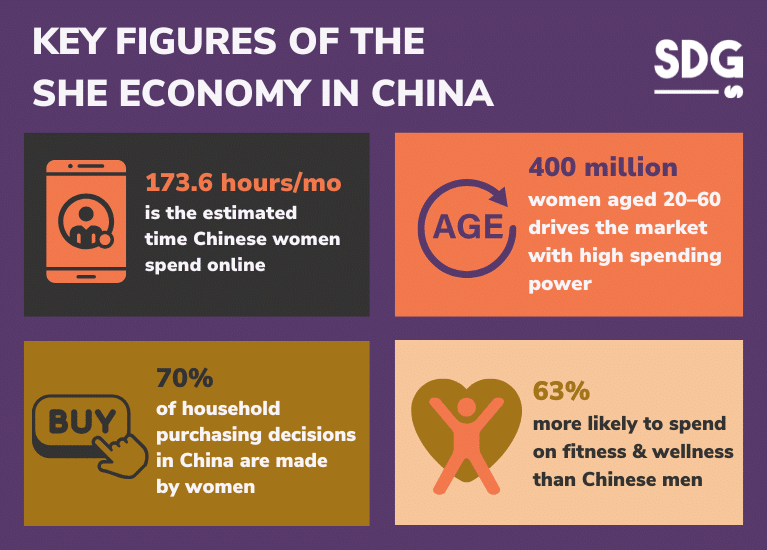
Here are the key figures you should know to build loyalty and generate sales effectively from Chinese female consumers.
- Chinese women spent 173.6 hours per month on the internet (vs. a 150-hour global average)
- Chinese women’s fitness and wellness spending is 63% higher than men
- Around 70% of household purchasing decisions in China are made by women
Why Foreign Brands Should Cater to Female Consumers in China
For foreign brands and marketers, tapping the She Economy means reaching an engaged consumer segment. Chinese women have the money to spend and the voice to influence others.
- Massive Consumer Base: China’s female market alone is bigger than Germany, France, and the UK combined.
- Growing Disposable Income: In recent years, incomes of Chinese women have been rising faster than men’s (4–7% annual wage growth for women vs. 1.7–6% for men). This narrowing gender income gap means more disposable income in women’s hands, who are unafraid to splurge.
- Multi-platform Shopping Patterns: Chinese female consumers shop everywhere: online marketplaces and physical stores, social media and group chats, livestreams, and offline events.
Top Trends You Should Know About China’s She Economy
1. Financially Independent and Affluent Chinese Women
The financial independence of millennial and Gen Z Chinese women primarily prompts the rapid growth in China’s female consumer market. Like it or not, today’s younger generation is no longer strictly bound by traditional gender roles set by society.
A recent report by the World Bank states that 59.6% of Chinese women actively participate in China’s labor workforce.
While the penetration is not as high as its male counterpart, the consistent growth of this demographic shows that female consumers are still more than capable of spending money for their self-fulfillment.

Image by Freepik
On top of that, the spending trend of local women also seems to focus on mobile shopping services. According to Statista, around 446 million female consumers buy goods through this medium.
The evolving trends in China’s female consumer group have led more brands to provide products and services supporting women’s needs and wants.
2. Chinese Women & Their Significant Role in Home Purchases
While the rise of modern gender roles did affect how younger women spend their money, the older female population is still the dominant figure in deciding family purchases. In an HSBC 2020 report, 3 out of 4 purchasing decisions at a Chinese family home are made by women.
An example of this trend is the growing demand for home appliances in China. Most women in local households are keen on acquiring energy-saving goods when buying household appliances like washing machines, refrigerators, or dishwashers.

Frequency of online purchases in China, by gender (Source: Statista)
If we look at the report above, more women are likely to shop in e-commerce channels several times a week.
The pattern of spending in China’s She Economy appears to indicate a clear preference for digital purchasing habits. In another survey conducted in May 2024, 59% of female respondents from China confirmed that they made more than six online purchases via live commerce in the last 12 months.
3. Increased Demand from Single Female Consumers
Household purchases for the family are not the only products Chinese women have been interested in recent years. In fact, the rise of single female consumers has led this demographic to spend more money on products that cater to their own happiness.
In 2022, China saw reports of a population decline of over sixty years. It presumably stems from the decrease in marriage and birth rates.
Despite government efforts to reverse this trend, including incentives like extended paid leave for newlyweds and subsidies for childbirth, many women remain in their stance of being single.
These changes are fostering a new dynamic in consumer behavior, particularly among single female consumers, who are increasingly becoming a significant economic force in the market.

Source: JD Corporate Blog
Recent reports by JD.com indicate that 54% of women in China prioritize spending on their own needs over those of their families. This data is backed by the increased consumption of luxury items, education, tourism, and health services by the local female population.
4. Chinese Women’s Interests in Health and Wellness
In China, there’s an ongoing trend surrounding health and beauty supplements among the local female population. These innovative products range from nutrient-enriched smoothies to vitamin-infused gummies, all aimed at addressing women’s unique health and wellness requirements.
Beauty supplements that enhance skin and hair quality and overall physical appearance are also gaining traction in the country. This sector is experiencing robust growth, with a compound annual growth rate of 10.4%, signaling substantial opportunities for market expansion.

SDG’s work with ELEVANT®
The renewed interest of women in health and wellness also opened the doors for the comeback of traditional Chinese medicine and plant-based, natural remedies in the business scene. These product categories are increasingly favored by the younger generations, who are now more inclined to incorporate natural supplements into their health regimen.
It’s a shift that emerged during the onset of the pandemic. About half of China’s Gen Z and younger female population have recently heightened their use of vitamins and supplements.
5. The Rise of Medical Beauty Aesthetics
Fueled by the traditional beauty standards in China, there has been a notable surge in the popularity of cosmetic surgery among younger women. Looking at the recent growth report by Deloitte, the medical aesthetics market has reached a value of 200 billion yuan.

Image by prostooleh on Freepik
Remarkably, the changing times allowed cosmetic surgery to gain widespread acceptance in China. Approximately 80% of Gen Z women in China are considering such procedures, and over 60% are prepared to invest more than 5,000 yuan in a single medical procedure.
● The Focus on Premium Self-Care & Beauty Products
Chinese women are also proud consumers of high-end cosmetics and self-care products. Younger customers, in particular, are highly interested in having exclusive access to upscale brands.
Anyone can see the prevalence of these trends when you scan through the user-generated content on Little Red Book (Xiaohongshu). Believe it or not, over 20,000 posts on this social media platform primarily discuss luxury goods in the beauty and wellness sector.
How To Promote Your Brand In China’s She Economy
1. Build Brand Awareness on Female-Centric Chinese Social Media Platforms
The She Economy in China is further fueled by the influence of social media on online consumption within the local business scene. These channels are dominated by platforms like Weibo, Douyin (TikTok’s Chinese counterpart), and Xiaohongshu (Little Red Book), where female consumers engage with lifestyle, beauty, and fashion content.
Your choice of platform highly matters in how your brand will be presented on social media. As you know, not all these apps offer the same content creation or promotional tools.

Lancôme on Douyin
Some beauty brands like L’Oreal and Lancôme get a lot of engagement from local consumers because they learned to leverage Douyin’s advertising formats and other features.
While interactive and visually appealing content, such as short videos and live streaming, are popular in social media, you must tailor your content to resonate with the interests and values of your target market. Ensure that your campaigns include culturally relevant themes, trends, and language.
2. Participate in Major Shopping Festivals on E-Commerce Platforms
International Women’s Day is a widely celebrated online event on different e-commerce platforms in China. It also coincides with the country’s Mother’s Day, so it’s only natural that many Chinese consumers look forward to special discounts implemented for this shopping festival.
Like the rest of the world, Chinese customers commemorate this event on March 8th. Tmall and JD.com often call it “Queen’s Day” or “Goddess Day.”

It’s also an opportunity for foreign brands to ride the surge and demand arising from the Women’s Day celebration.
Besides Women’s Day, you can also consider participating in events like Singles’ Day (Double 11). Not only is it the largest e-commerce festival in China, but it also aligns with the increasing number of single female consumers.
Don’t forget to choose the right e-commerce platforms based on your product category and target audience.
3. Localize Marketing Strategies for the Female Consumer Market in China
To forge a deeper emotional bond with female customers in China, brands should craft marketing narratives and product selections that reflect the values and interests of this demographic.
Developing a brand story that aligns with the aspirations and emotions of female customers is crucial. It involves crafting a compelling narrative that not only connects on an emotional level but also fosters brand loyalty.
A skincare company, for example, might center its branding around themes of self-care and self-love, striking a chord with women who value personal well-being.
4. Collaborate With Niche-Specific KOLs and KOCs
When it comes to female consumption, it’s essential to note that women in China crave representation. As a result, they’ll likely follow Key Opinion Leaders (KOLs) and Key Opinion Consumers (KOCs) who align with their interests and online shopping needs.
Consider partnering with online personalities who align with your brand image and have a solid following among Chinese women. Researching and choosing KOLs and KOCs with genuine influence and engagement with their audience is essential for a successful campaign.

KOLs for Perfect Diary on Xiaohongshu
When you collaborate with them for product reviews, tutorials, and branded content, these online figures can provide relatability that eventually sways their fan base’s purchasing decisions.
However, remember that overly promotional or scripted content can be off-putting to consumers, so ensure the collaboration feels authentic and genuine.
5. Develop a Personalized Branding
Personalization is a key strategy in appealing to this segment. By offering individualized product recommendations, dedicated customer service, and exclusive event access, brands can create unique experiences that resonate with Chinese women.
Brands must also focus on empowering women and celebrating their achievements. Foreign marketers can achieve this by designing marketing campaigns that advocate for gender equality and by collaborating with organizations dedicated to women’s causes.
Such initiatives should highlight and celebrate women, demonstrating a brand’s commitment to supporting and empowering female consumers.
Quick Q&A
How big is the female consumer market in China?
China’s She Economy is already a global force. Accenture estimates that nearly 400 million women aged twenty to sixty spend about ten trillion yuan each year, a sum roughly equal to the combined retail markets of Germany, France, and the United Kingdom.
Chinese women account for around 624 million active internet users in China. This gives them enormous sway over e-commerce, social shopping,
What are female Chinese consumers buying?
Female Chinese consumers predominantly purchase products in categories such as beauty and personal care, fashion and apparel, and health and wellness products. They also show strong interest in high-quality, international brands and are increasingly engaged in online shopping, particularly for luxury goods and services.
Ready To Dominate The She Economy in China? Get In Touch With Us Today!
There’s no single, effective way of marketing your products and services in China’s She Economy. It includes different consumer habits, preferences, and trends, so it’s only natural for foreign brands to find this segment incredibly challenging to navigate.
You may also want to read:
At Sekkei Digital Group, we understand the complexities of Chinese female consumers, including their purchasing behaviors online. With our extensive expertise in this niche, we can help you unlock your brand’s potential.

Whether it’s crafting compelling advertising campaigns, utilizing social platforms, or collaborating with relevant KOLs, we have all the digital solutions you need. Contact us today, and let us help you navigate these intricacies.

References:
China’s ‘She Economy’ Booms As Women Invest In Their Own Happiness
What’s fueling the rise of ‘Sheconomy’?
Winning Over The ‘She Economy’: How To Tap Female Consumption In China
Are China’s female consumers holding more than half of the sky?
Women’s Rising Consumer Clout Propels